Getting It Booked In
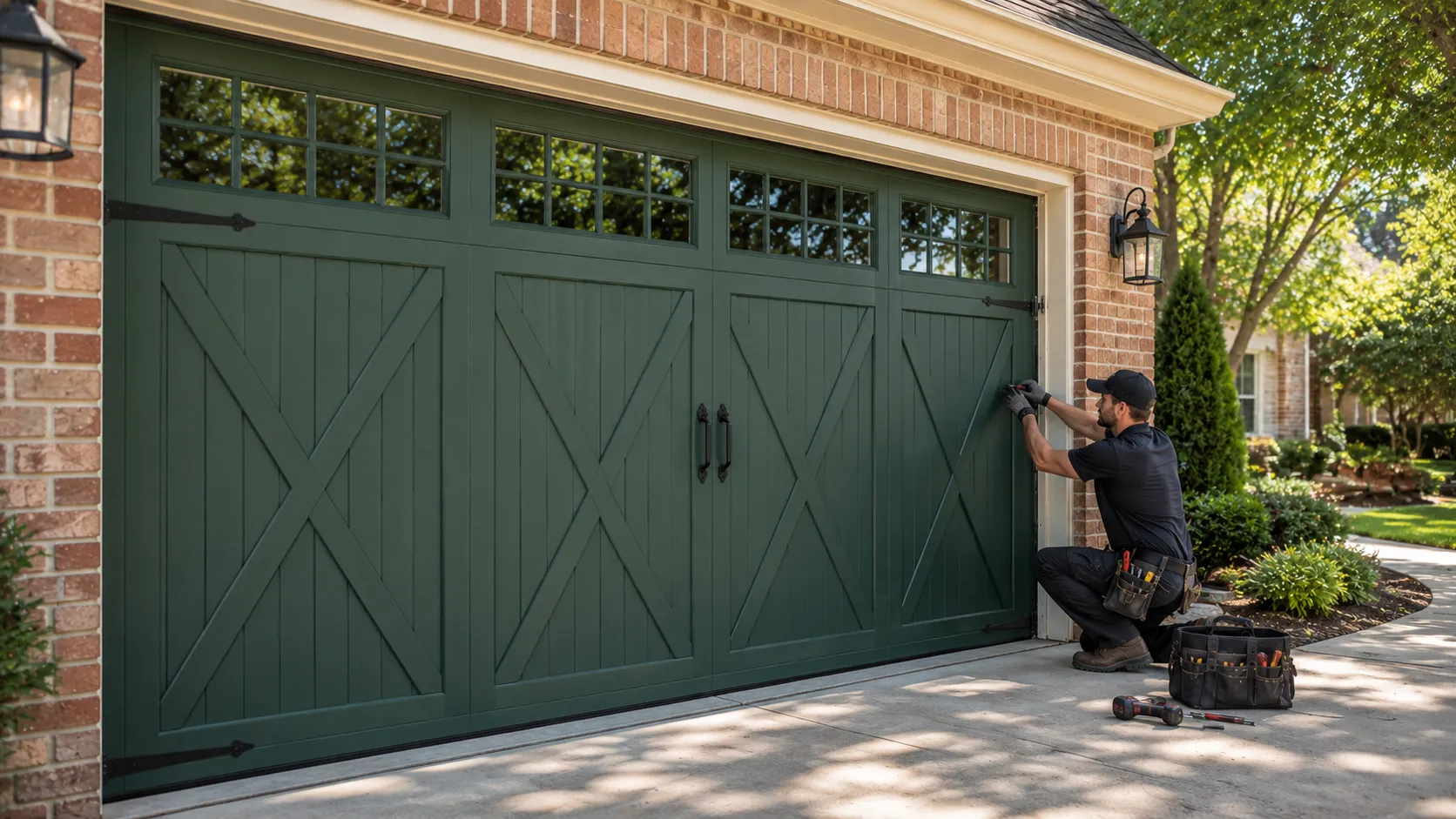
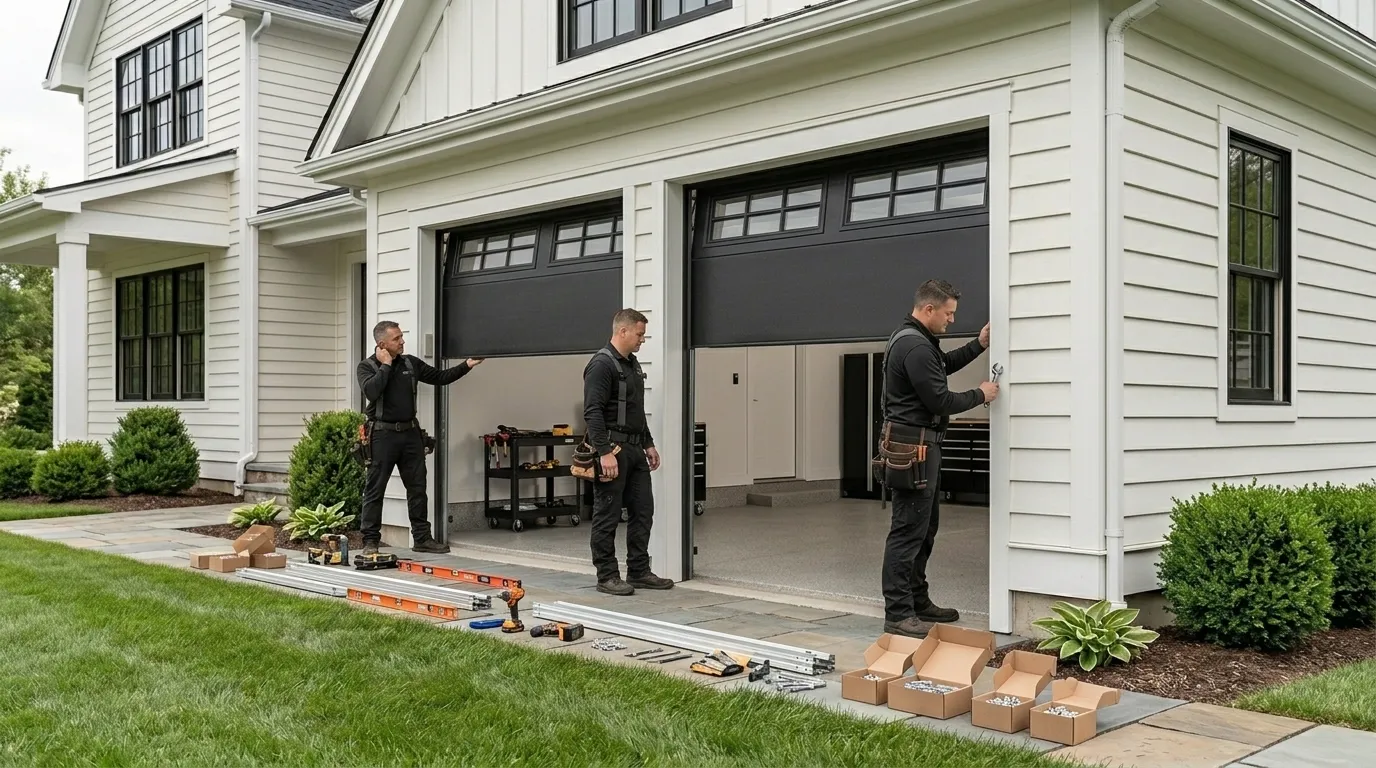
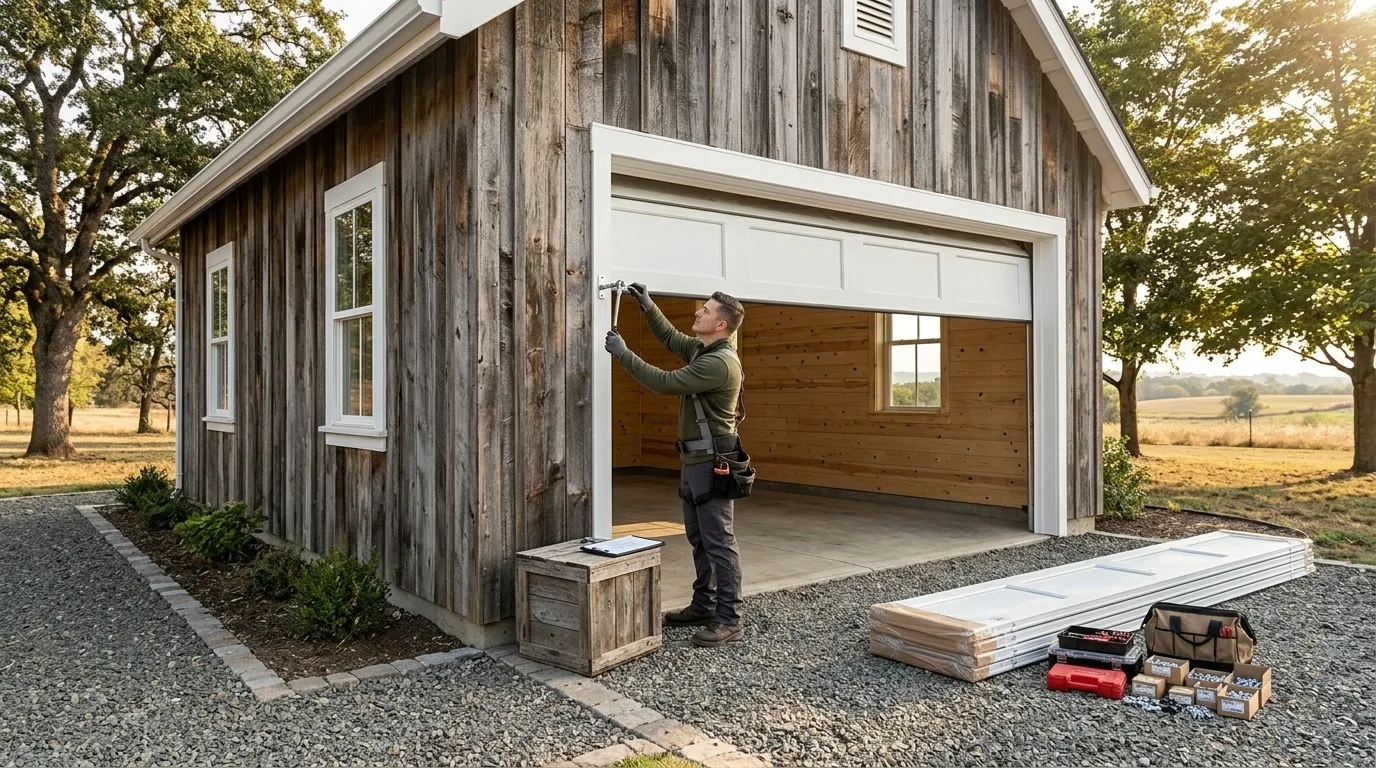
We run this out of Rockwall, about 5 miles from Heath, so there's no branch office here and no separate crew - same trucks, same techs, just a short drive over. When you call, tell us the door's size and rough age; most Heath houses were built around 2001, which tells us a lot before we even see the driveway. That median build year means we're usually looking at a steel sectional door, often the wider double-car size that shows up on the larger lots out here, not the narrow single-car doors you'd find in an older, tighter subdivision. Booking is straightforward: describe what's happening, we tell you what parts we'd expect to bring, and we head out. We don't stock a Heath-specific inventory separate from Rockwall's - it's the same trucks, loaded for the housing stock we know we'll find here.
Stocked Parts
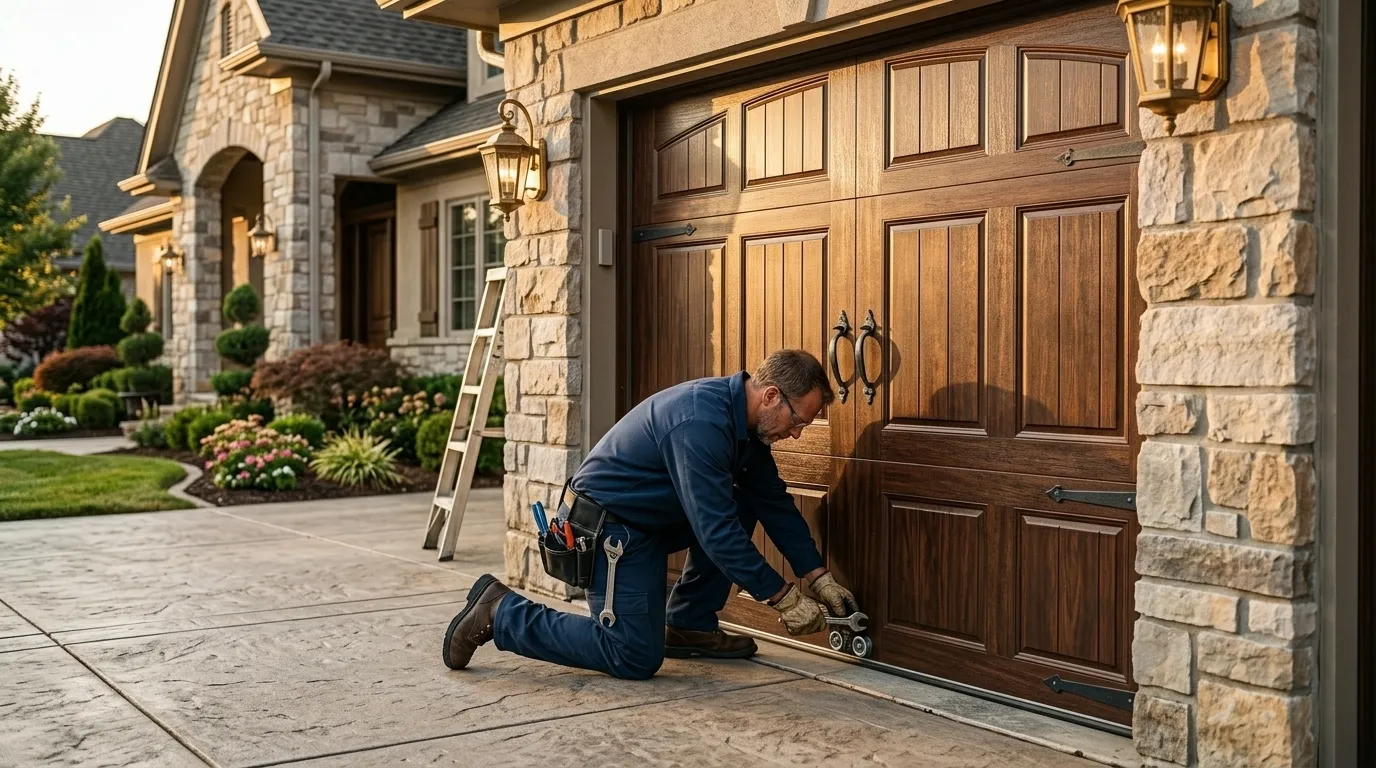
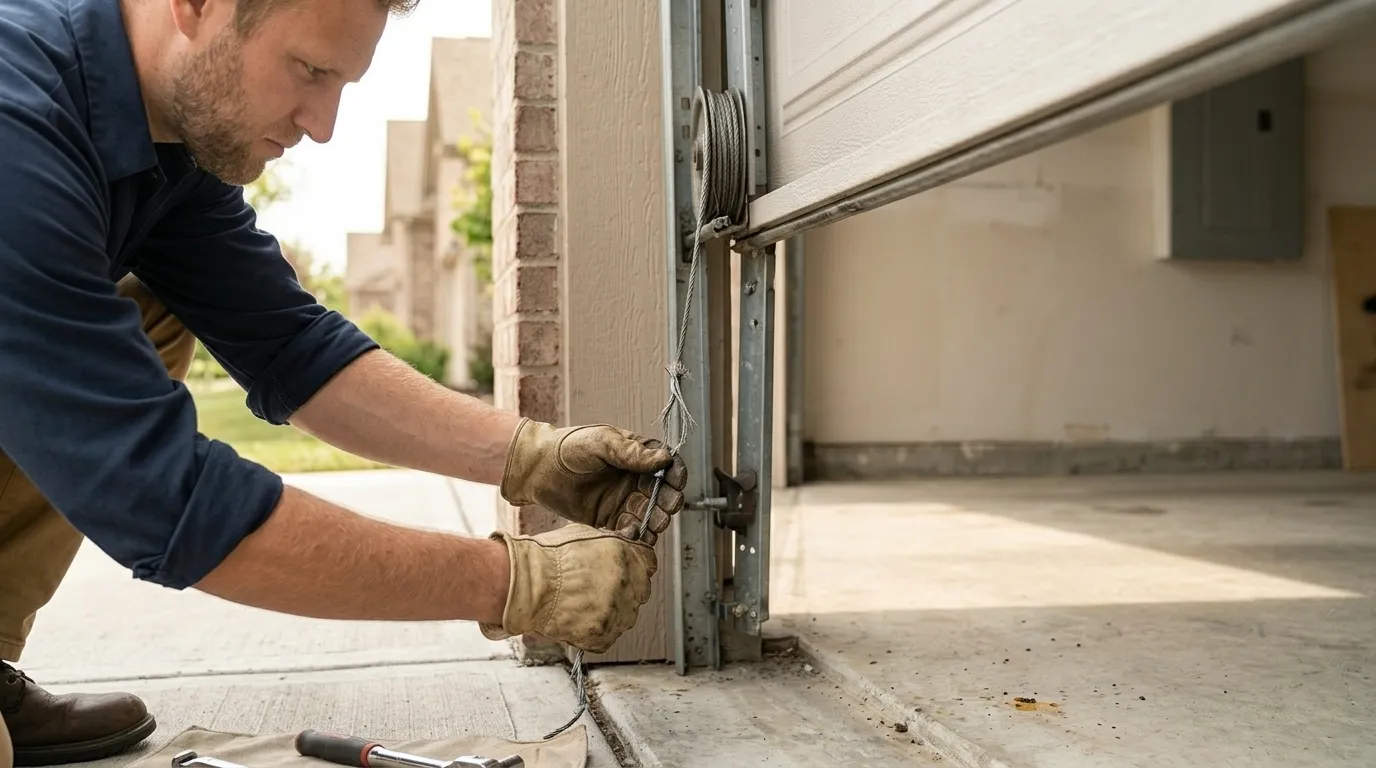
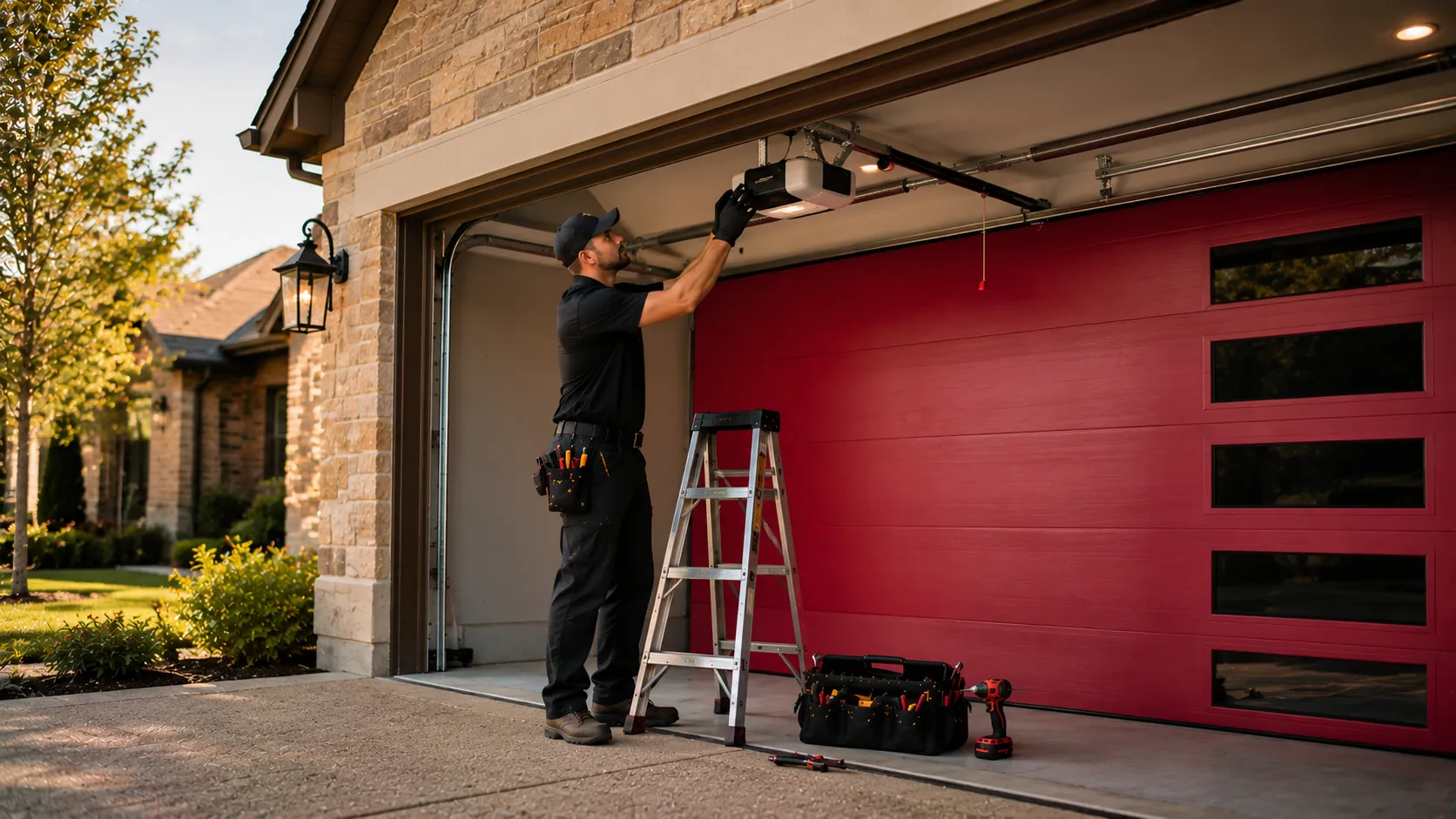
For a neighborhood built around 2001, the parts that fail first are predictable: torsion springs sized for a heavier steel door, nylon or steel rollers worn from two decades of use, and the extension cables that run alongside them. We carry standard torsion and extension spring sets sized for both single 8 or 9-foot doors and the wider 16-foot doubles common in homes from this era, plus the openers that were typically chain or belt drive when these garages were built. What we don't always have on the truck is a match for a discontinued panel style - if a door from this build year used a design the manufacturer stopped making, we may need to order the panel rather than pull it off the shelf. That's the honest limit: we can fix the mechanics same-visit almost every time, but an exact panel match on an older run isn't guaranteed without a lead time.
What You Are Seeing
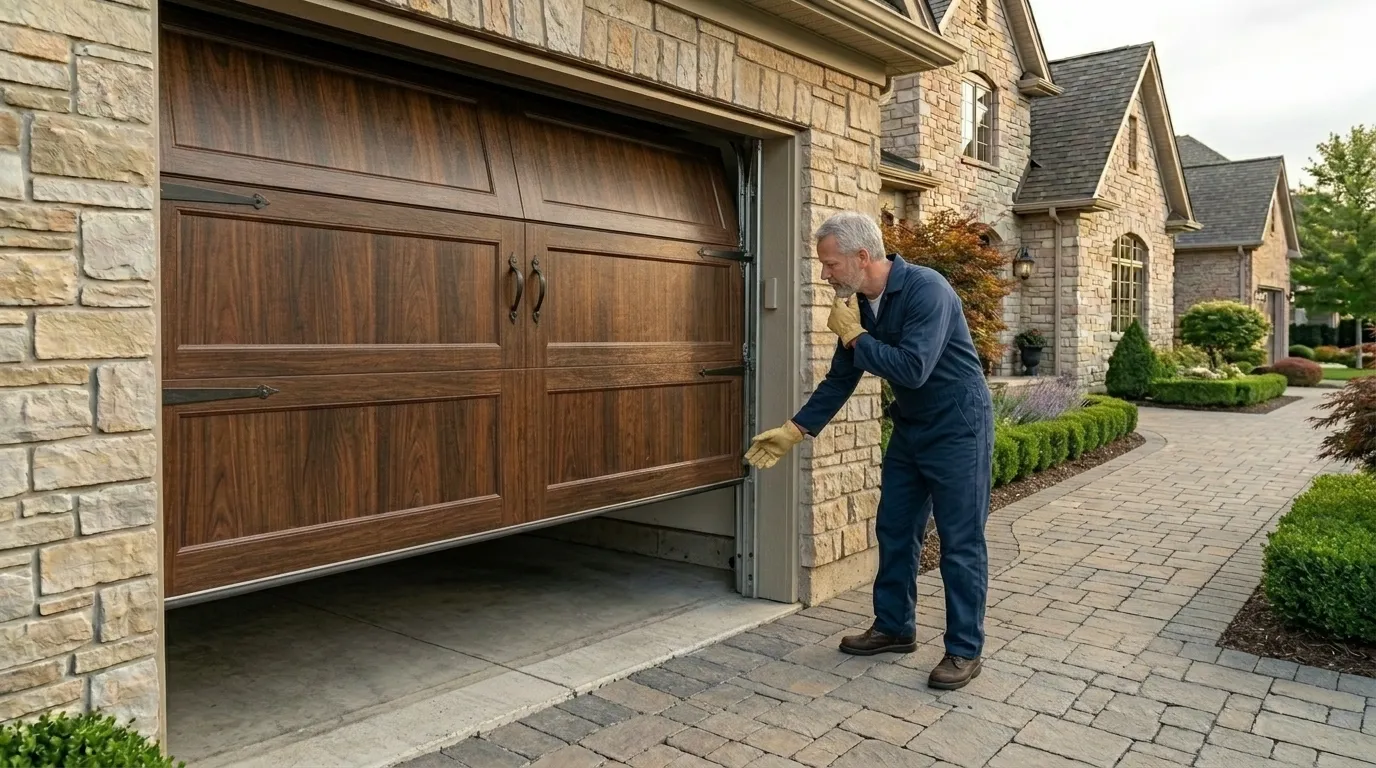
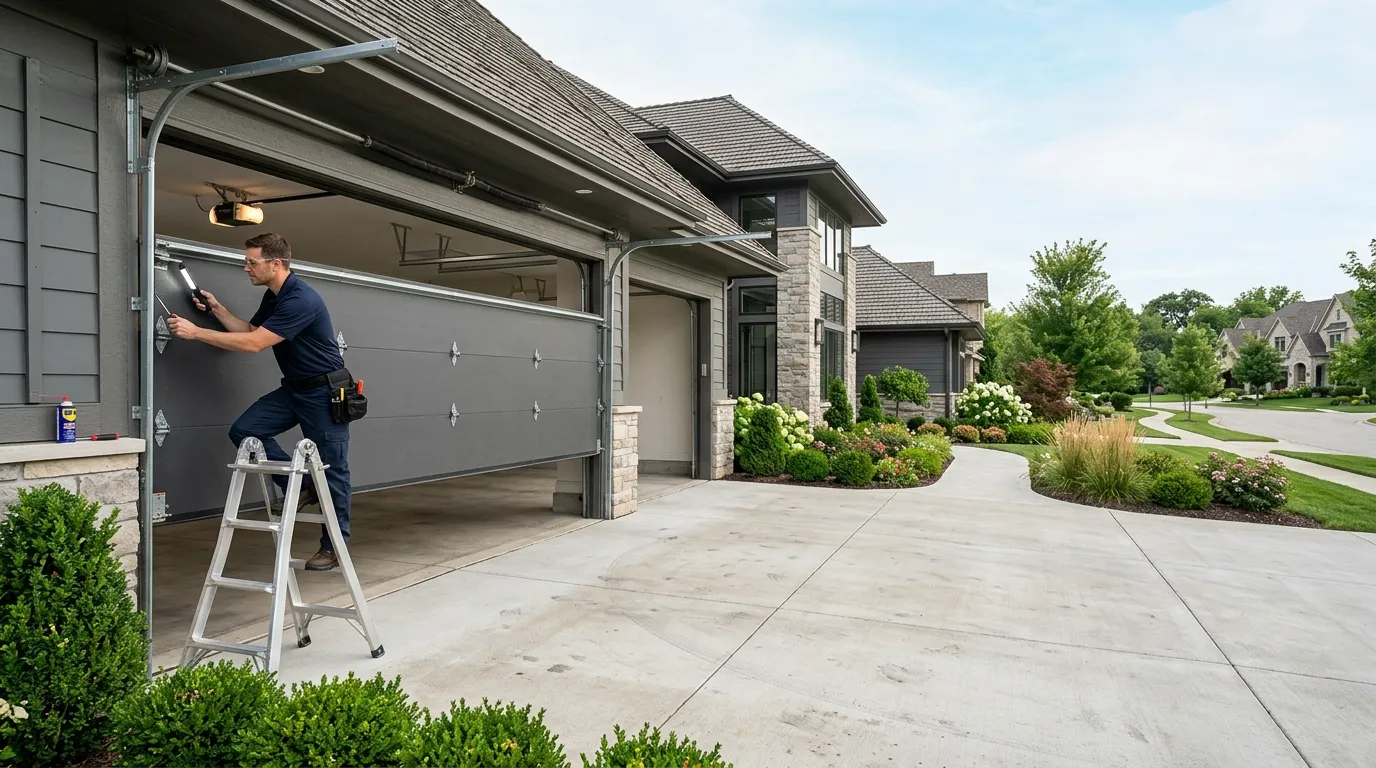
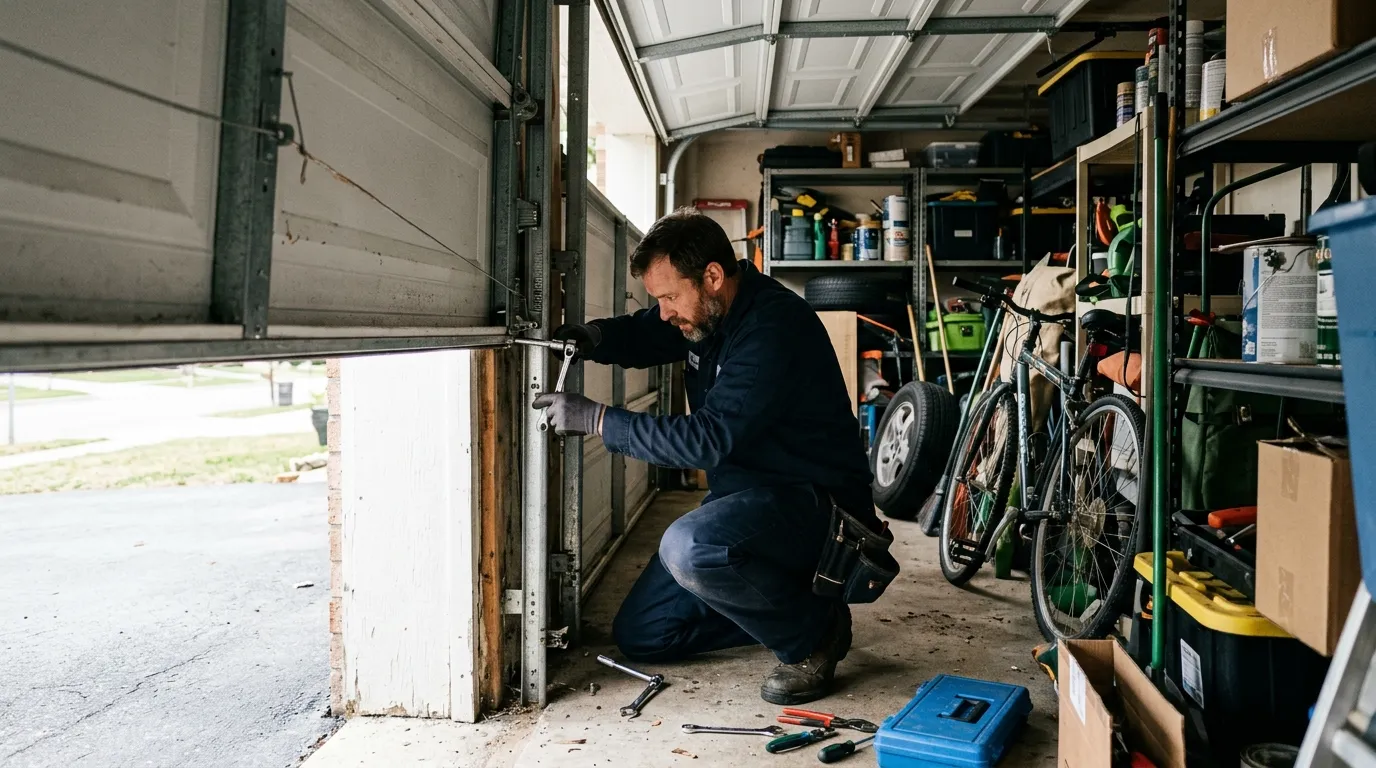
If your door is sagging on one side when it's halfway up, that's usually a broken cable or an off-track roller, not the spring - springs tend to fail all at once, with a loud bang and a door that suddenly won't budge or drops fast. On a house from around 2001, a grinding or popping sound on the way up often means a roller that's worn past its bearing, which happens right on schedule for a door this age. If the opener runs but the door doesn't move, check the drive gear before assuming it's the motor - that gear is plastic on most openers from this build era and it's a cheap, common failure. None of this means every noise is an emergency; some of it is just what a 20-plus-year-old door sounds like before its next service.
What You Pay
We don't have a published price list here, and we're not going to invent one - what a job costs depends on whether it's a spring, a cable, a full opener swap, or a panel that needs ordering. What we can tell you is that Heath households sit well above the wider area's income profile, at a median around $216,160 against the broader area's $124,500, and that shows up in the kind of doors we're asked to service here - heavier, wider, sometimes with add-ons like insulated panels or smart openers that a base-model door wouldn't have. Bigger door, bigger spring, generally a bit more on the repair. We'll give you a number before we start, not after.