The Complications
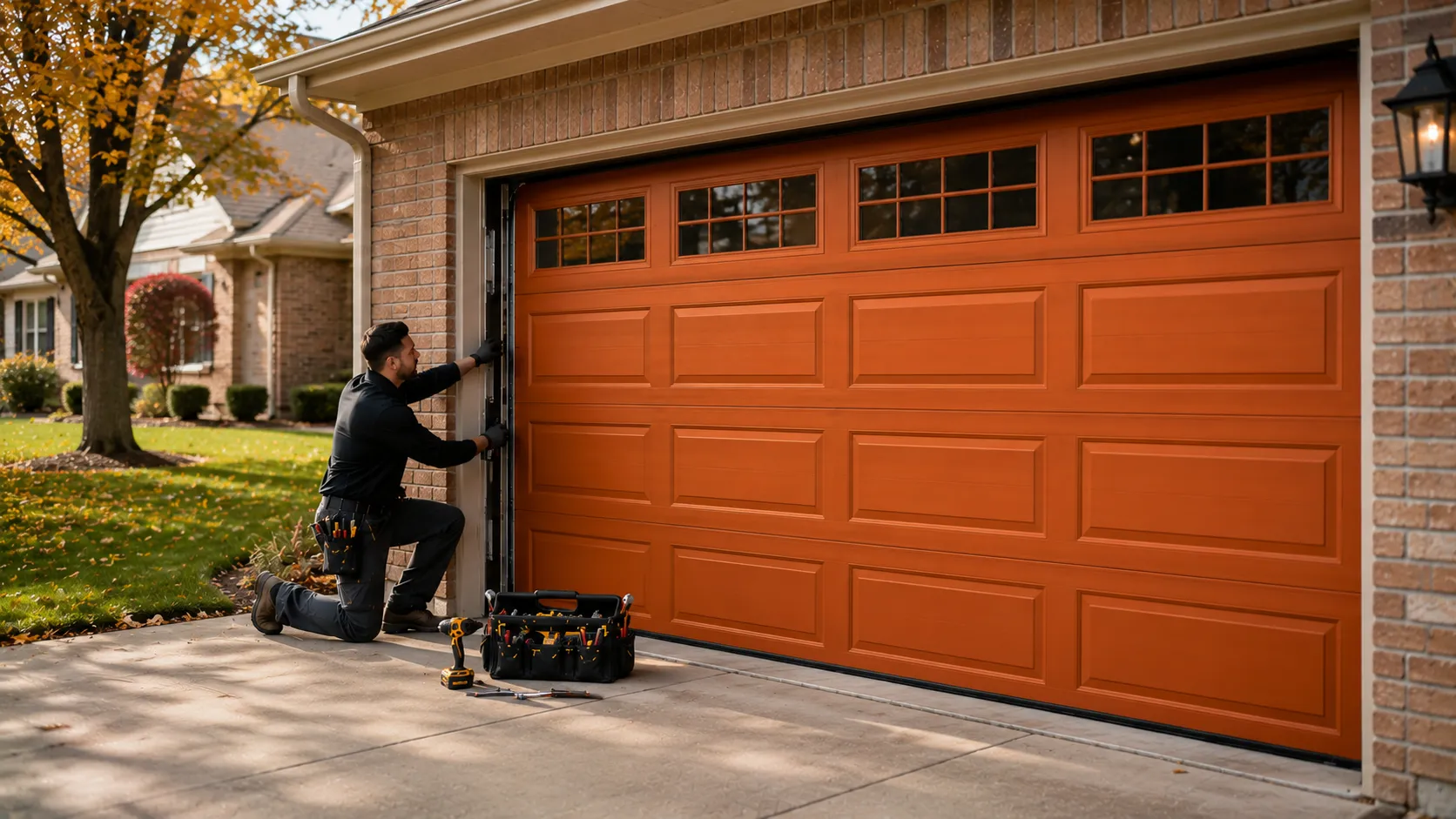
Fate's houses are young. The median year built here is 2013, well past the 1971-2013 range that covers the wider service area, and that changes what breaks. A door built in the last fifteen years usually came with a factory torsion spring rated to the door's actual weight, a steel-panel design, and a chain or belt opener with a rolling code board - not the older tab-and-slot hardware or worn-out AC motor units we still pull out of houses built in the '70s and '80s elsewhere in the territory. What we run into in Fate is more often a cheap builder-grade opener starting to fail early, a nylon roller worn out ahead of schedule because it was the low-cost option on a spec-built house, or a bottom bracket that was never torqued right at install. Fewer old-house surprises, more new-house shortcuts. The climate here is mild with some freeze risk, so we don't see the extreme heat-cycle spring fatigue you'd get in a harsher climate, but a few nights below freezing a winter is enough to make a marginal spring or a dry hinge finally let go.
The DIY Question
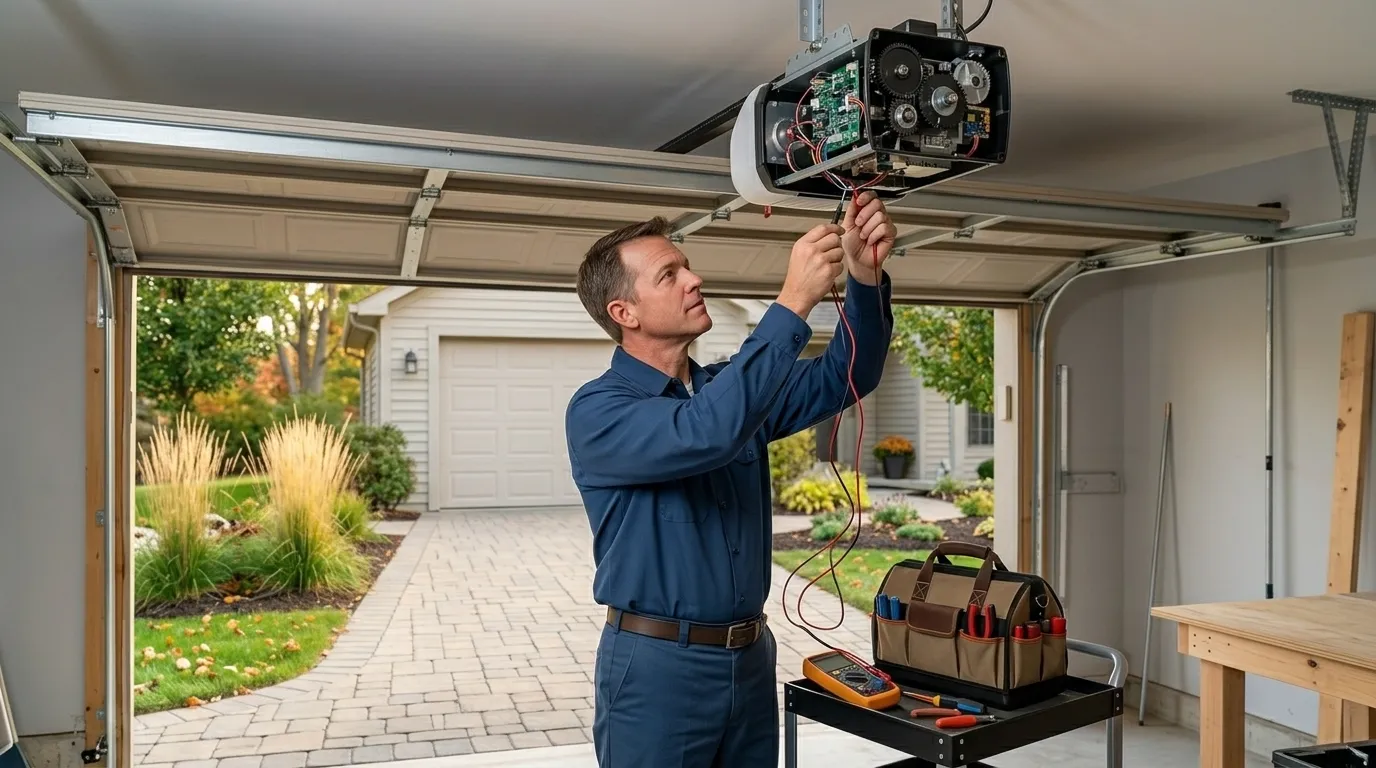
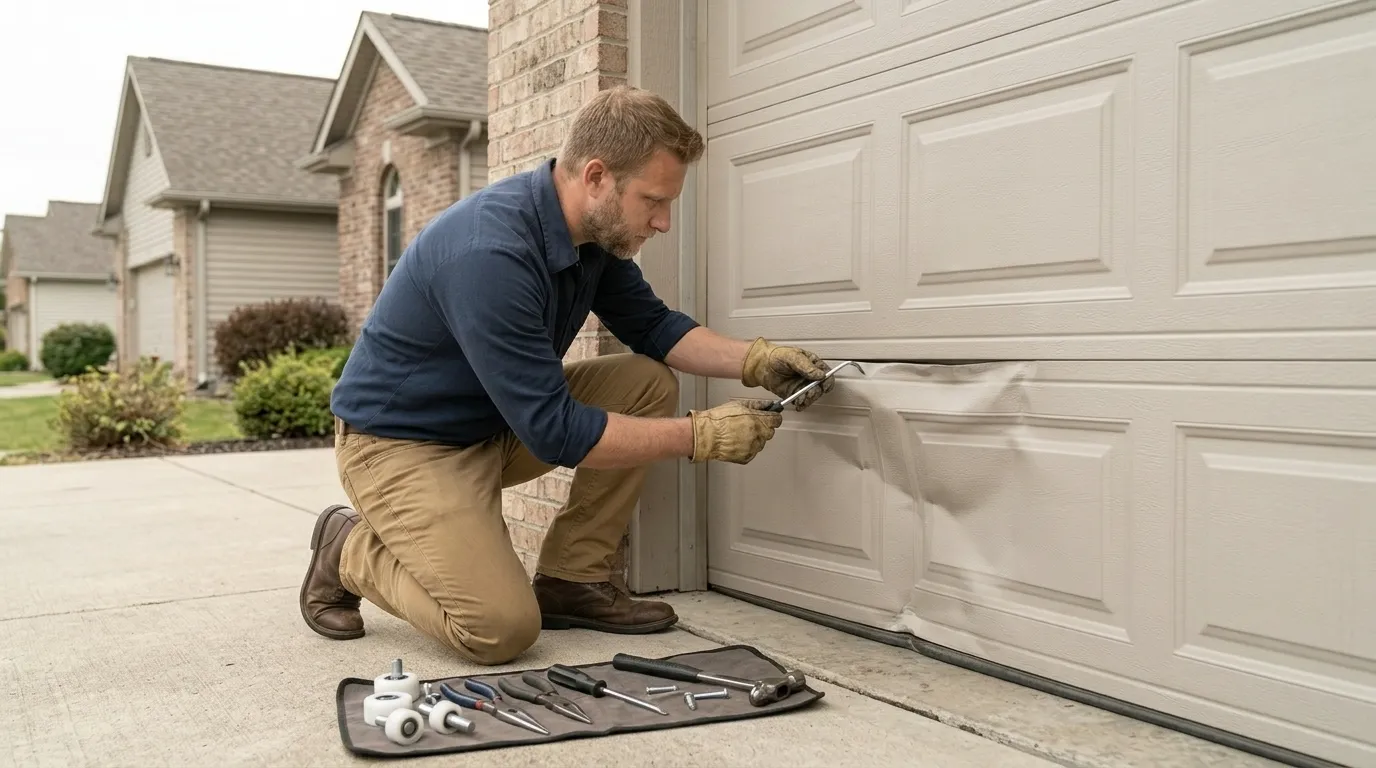
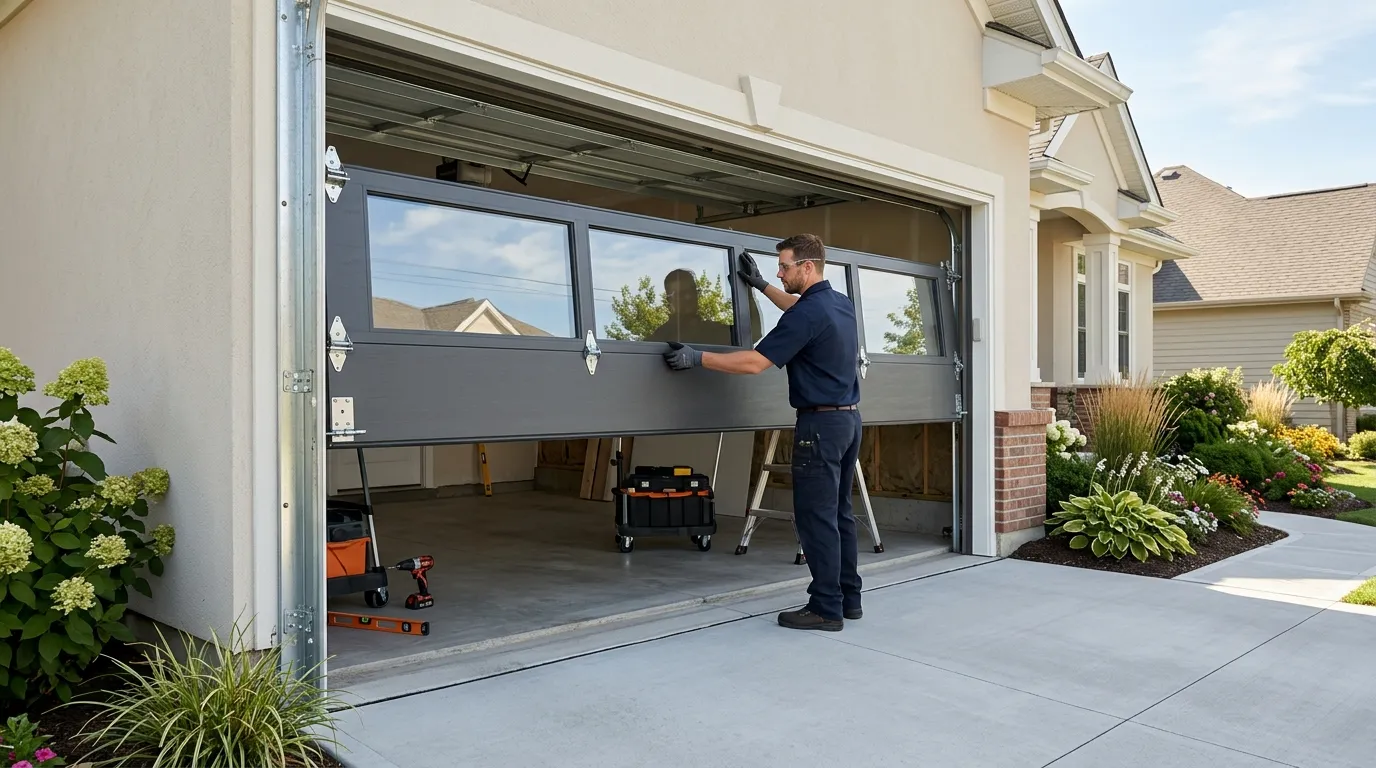
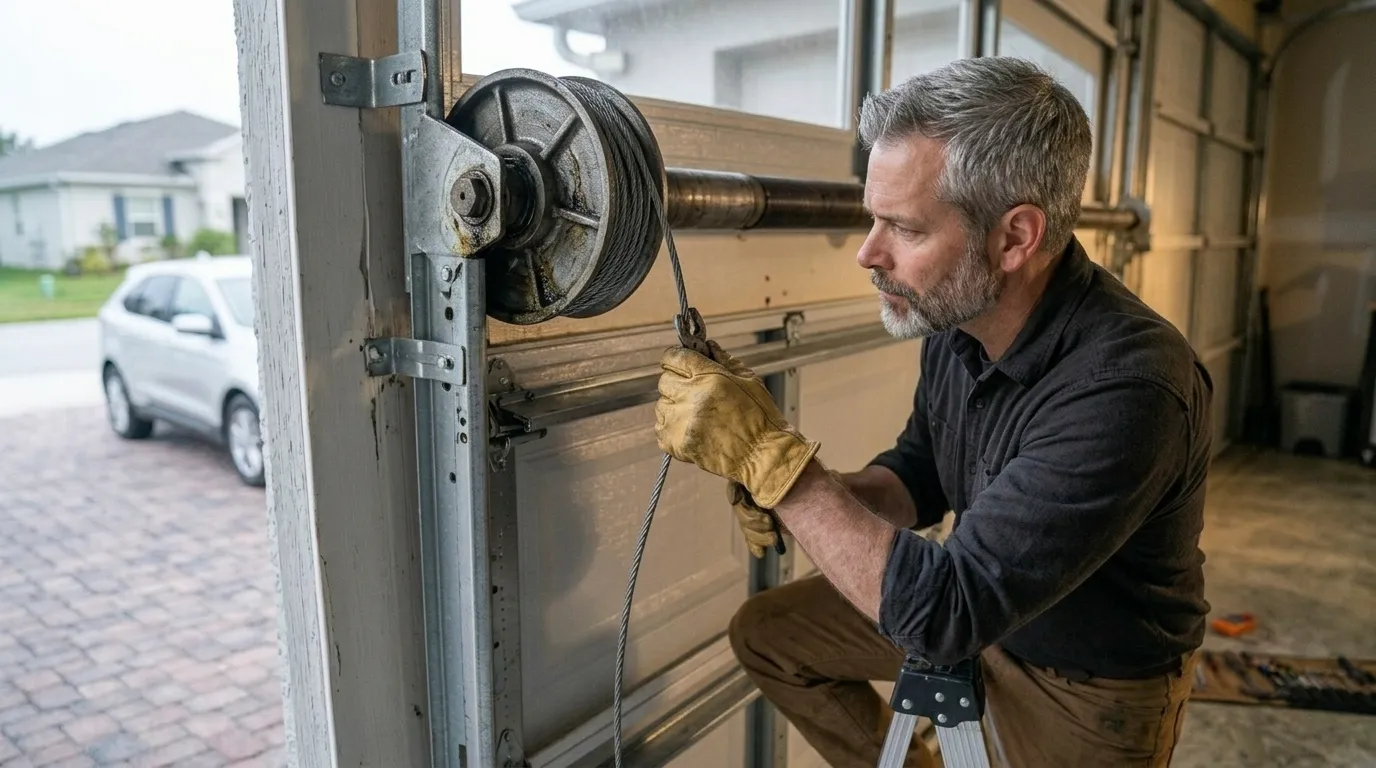
A homeowner in a house built around 2013 can usually handle basic maintenance: lubricating rollers and hinges, tightening loose hardware, testing the auto-reverse safety feature. What you shouldn't touch is the torsion spring itself - even on a newer door, that spring is wound under real tension and it doesn't care how new the rest of the door is. We also wouldn't recommend swapping an opener yourself if the house still has the original garage door safety wiring from a builder install; it's not always up to current code and mixing that with a new opener board is a bad combination. If the door is only a few years old and one panel is dented or a sensor's knocked out of alignment, that's often a fix, not a replacement - we'll tell you straight when it's cheaper to repair than replace.
Stocked Parts
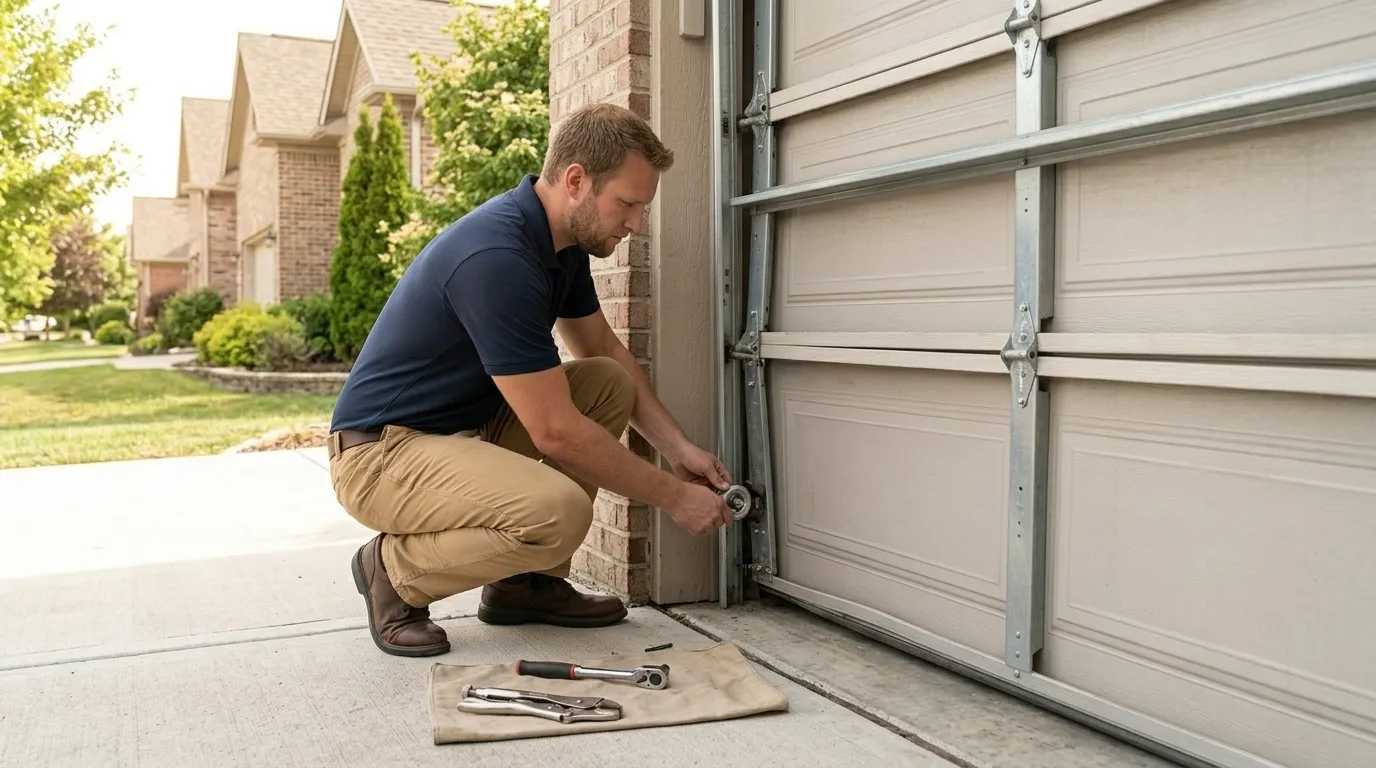
Because most of Fate's stock is 2000s-era and later, the parts we bring on the truck for these calls lean toward standard torsion springs sized for lighter steel doors, factory-matched extension cables, and the rollers and hinges that fit newer track profiles - not the odd-size hardware older 1970s installs sometimes need. We travel from Rockwall, about 3 miles away, so we load the truck before we head out rather than stocking a separate depot in town. If a job needs a part outside what's on the truck - a specific opener control board or a discontinued panel style - that's a lead-time item, and we'll say so up front instead of pretending otherwise.