How We Fix It
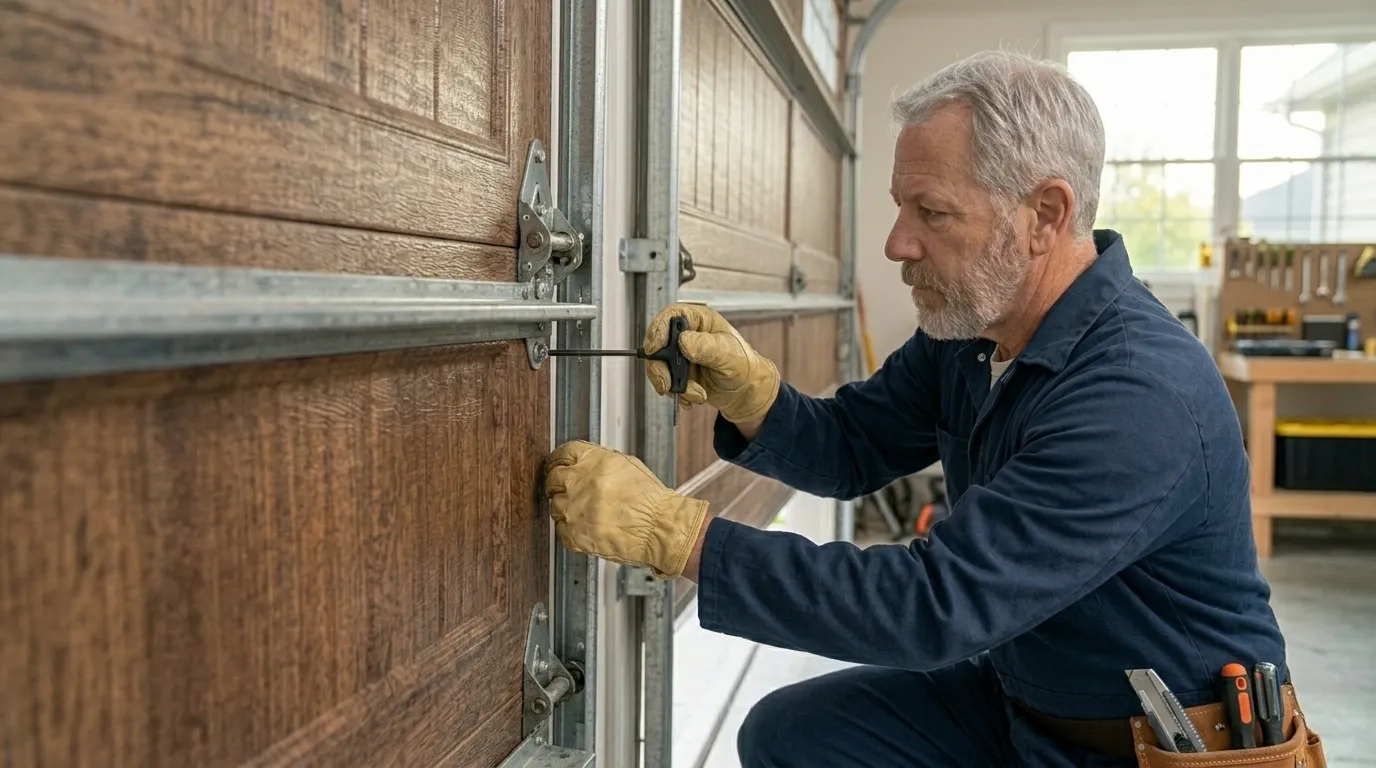
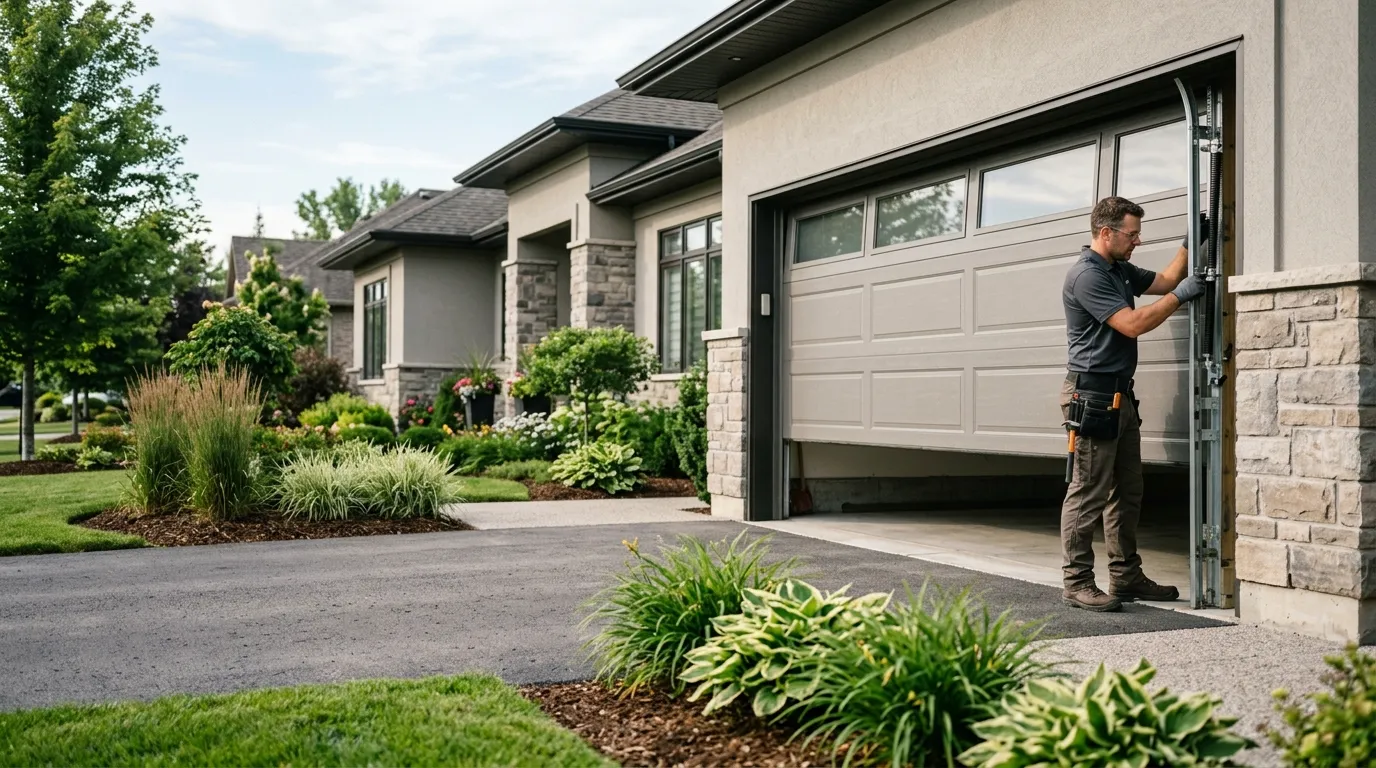
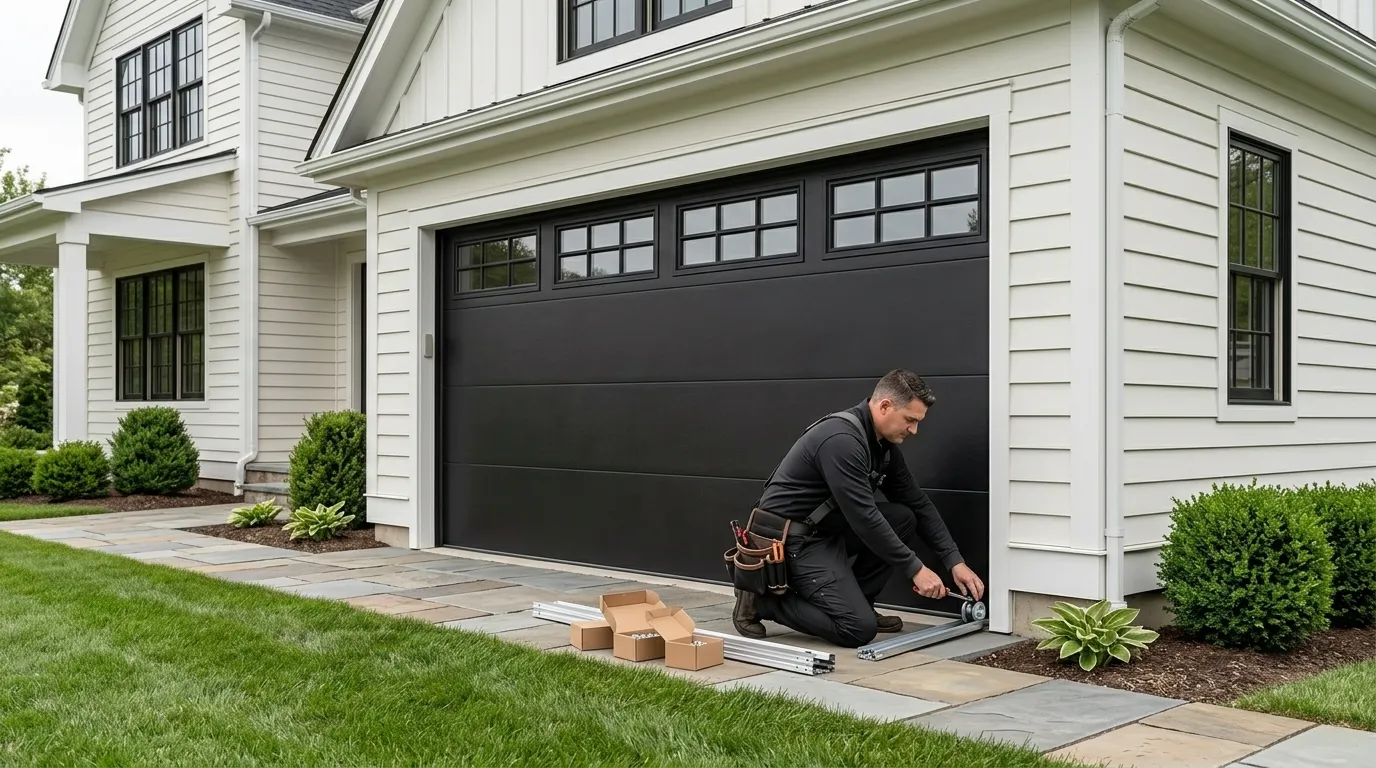
Most doors we get called out to in Parker are still running the track, rollers, and hinges the builder put in when the house went up. With a median build year around 2005, that means twenty years of the same steel rail, the same stamped brackets, never swapped for anything heavier. When a door comes off track here, it's rarely the track itself that failed first - it's a roller that wore thin, a hinge that loosened, or a bracket bolt that backed out and let the whole rail flex under the door's weight.
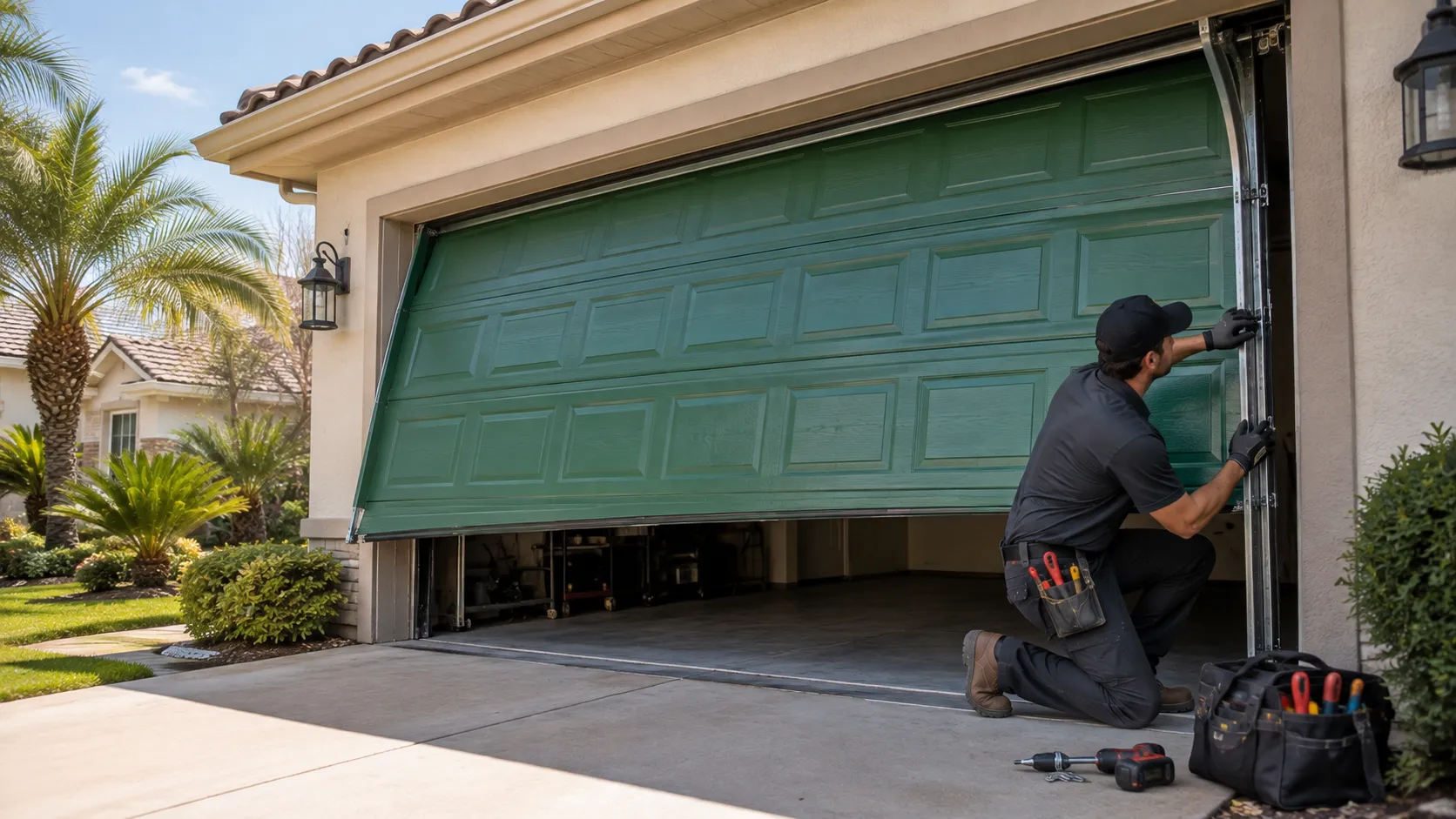
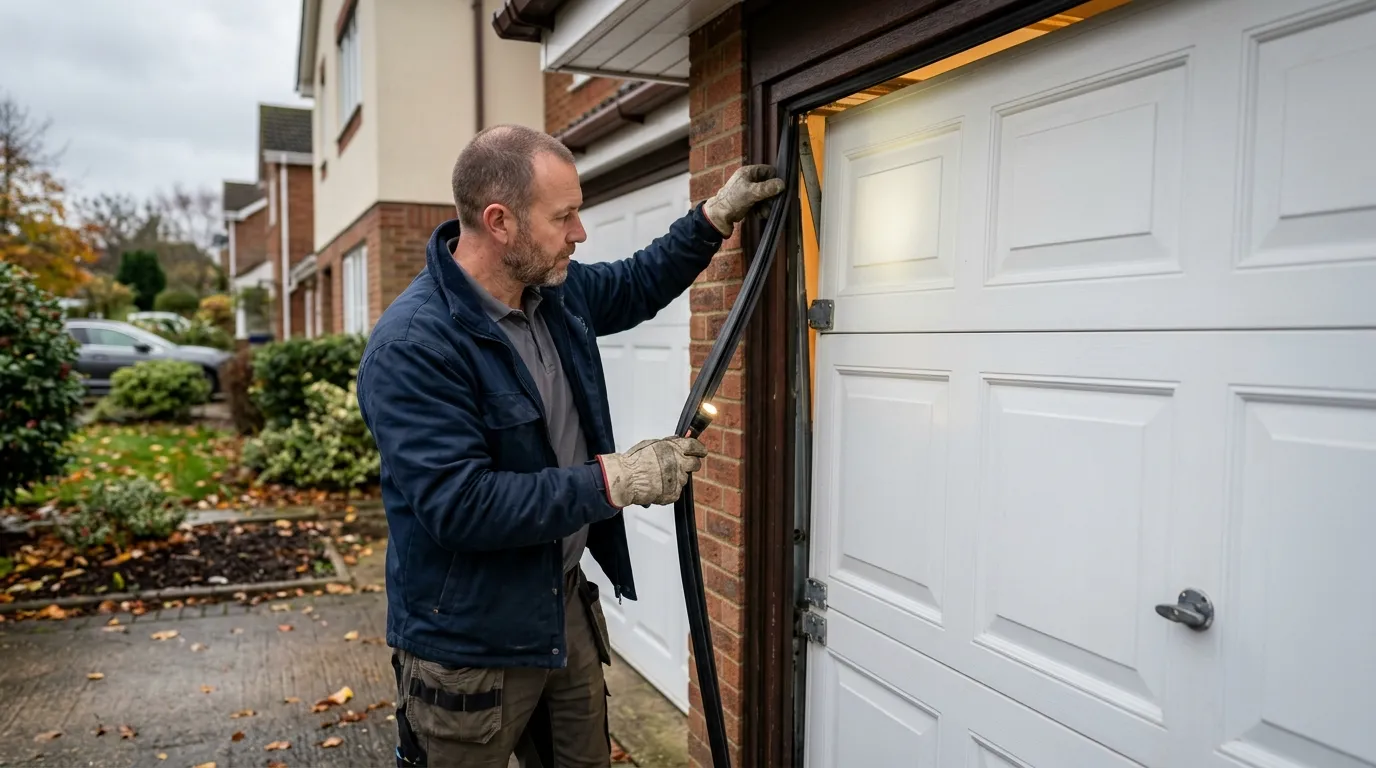
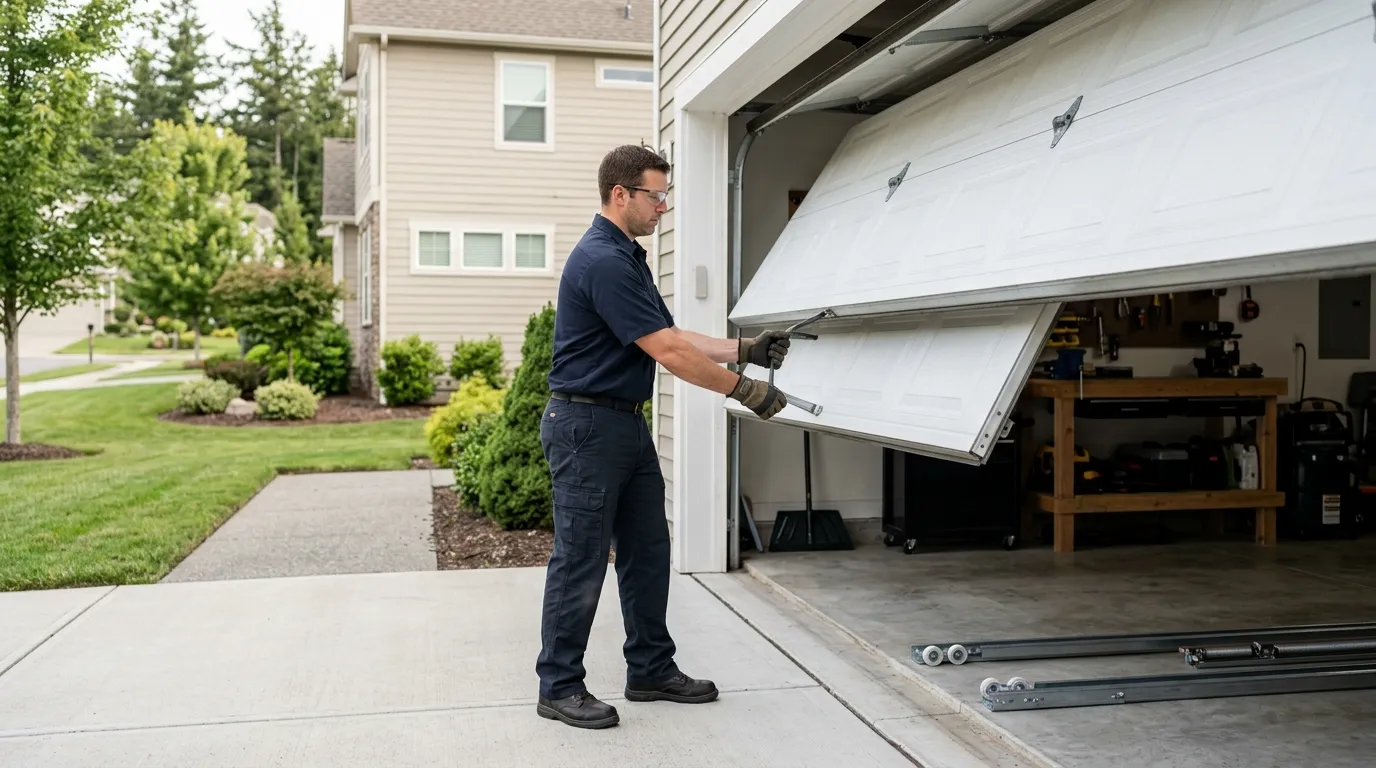
We start by pulling the door back onto the rail by hand, checking the track for the kind of bend that means it has to come off the wall entirely versus the kind you can re-seat and re-bolt. Then we check plumb on both sides - a door that's out of square on one track will walk itself back off within weeks even after a clean re-seat. If the rollers are the builder-grade nylon most 2000s-era tract construction used, we'll flag that: they're usually the actual root cause, not just a symptom.
We don't stock every original bracket pattern from every builder in the truck, so if your track hardware is a discontinued style, we tell you that up front rather than promising a same-visit fix we can't back.
The DIY Question
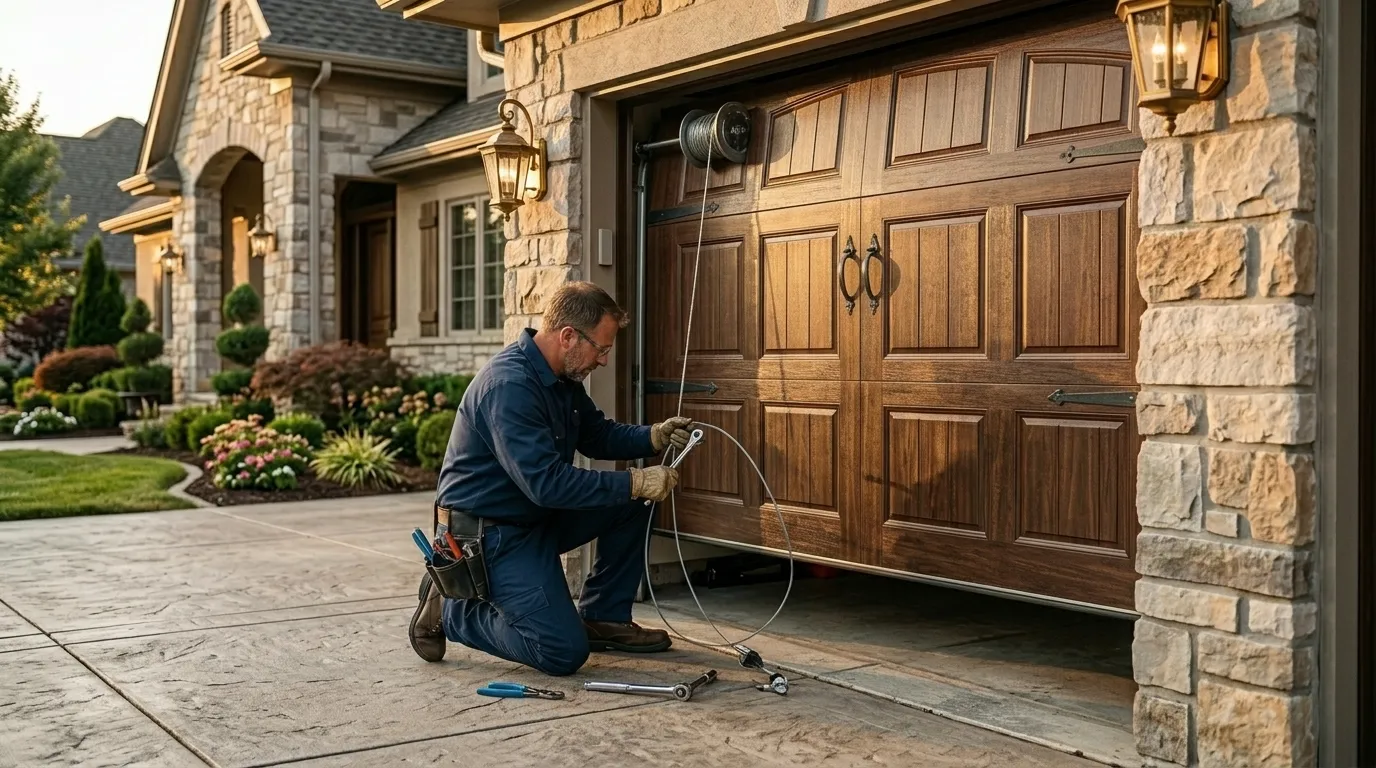
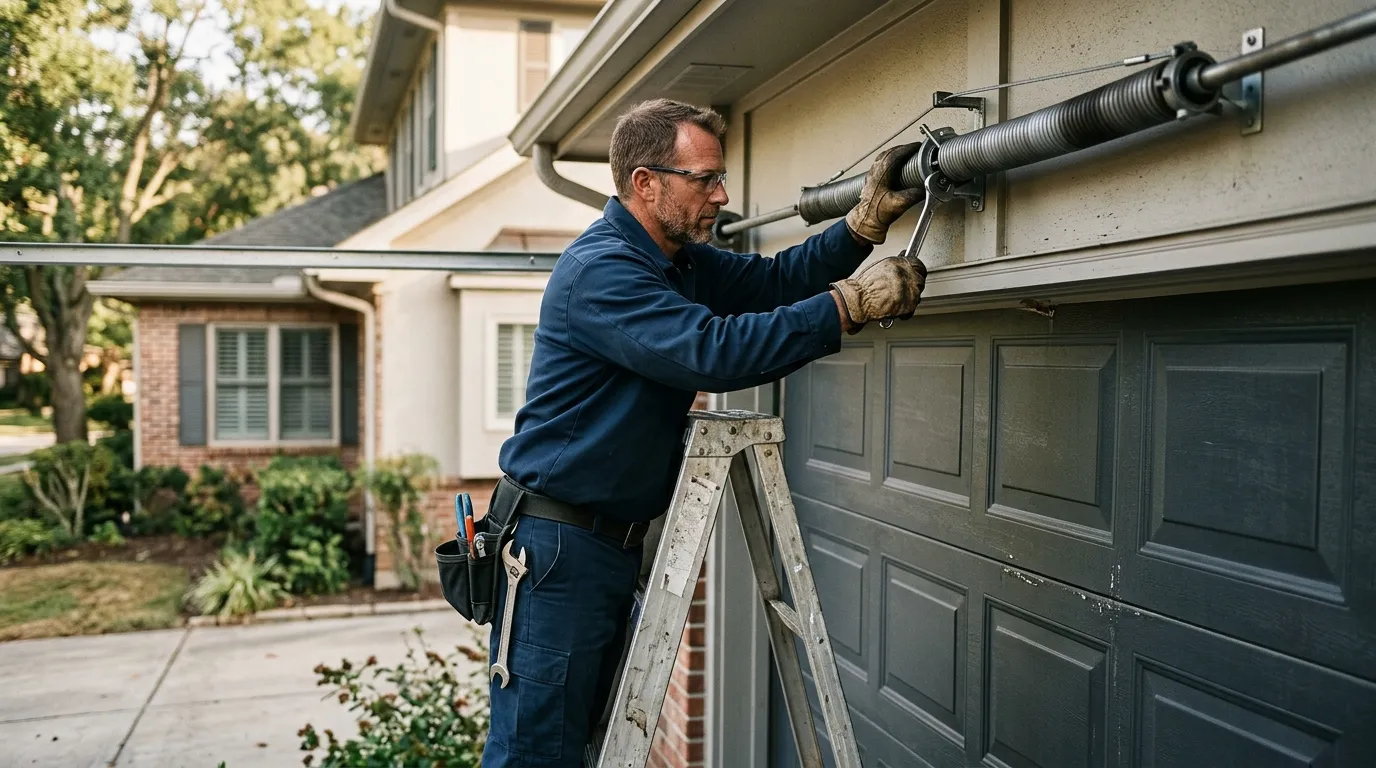
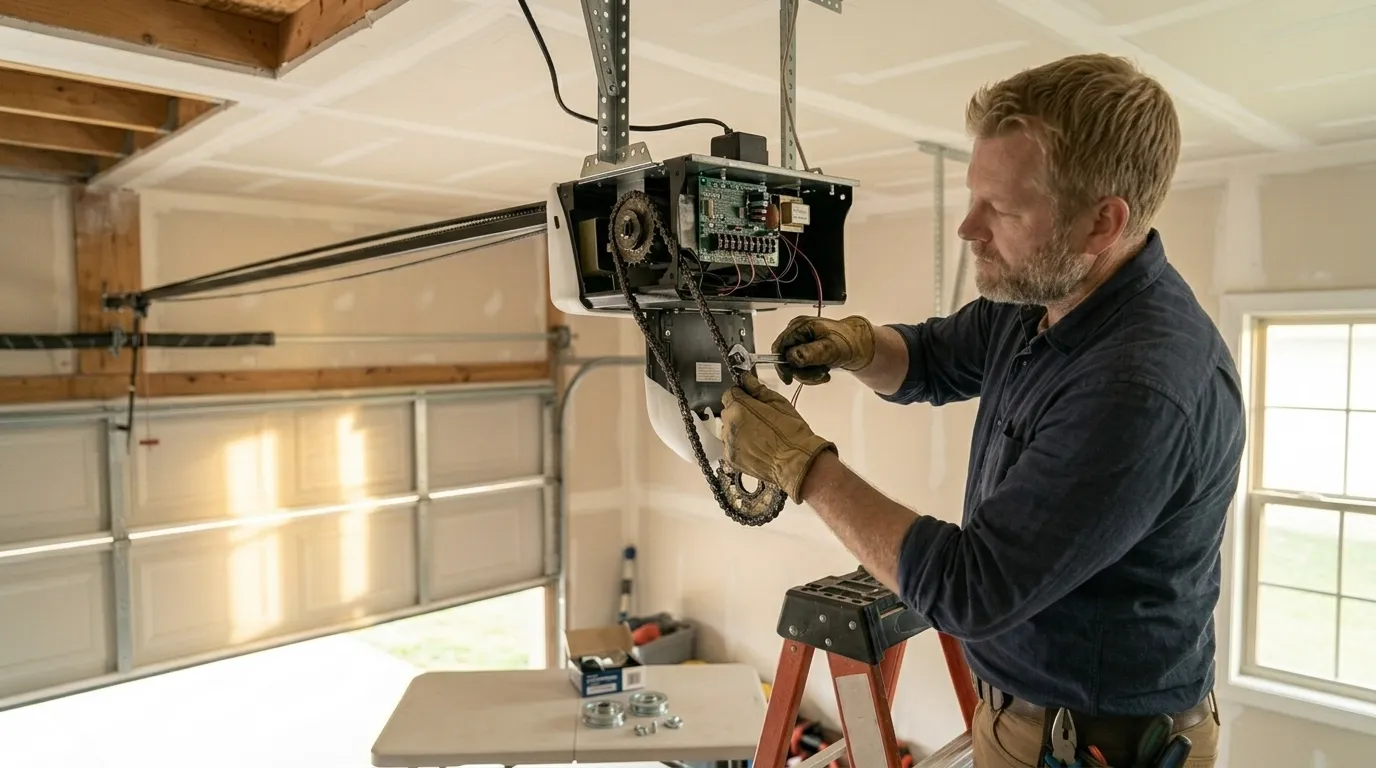
Pushing a light door back onto its track by hand is something a lot of Parker homeowners can and do handle themselves, especially on a single door with no visible bend in the rail. Where it stops being a DIY job is anything involving the spring side - if the door came off track because a cable jumped the drum or a spring let go, the door is now under tension that can hurt you badly if you don't know how to release it.
Household incomes in this part of the service area run well above the wider Rockwall-area median, and we get plenty of calls from owners who'd rather pay for it done right than spend a Saturday guessing at torque on a torsion spring. That's a reasonable call. The other honest answer: if your track is visibly bent, don't force the door back on to see if it holds. A bent rail that's re-seated without being straightened will come off again, usually worse the second time.
Why It Happens Here
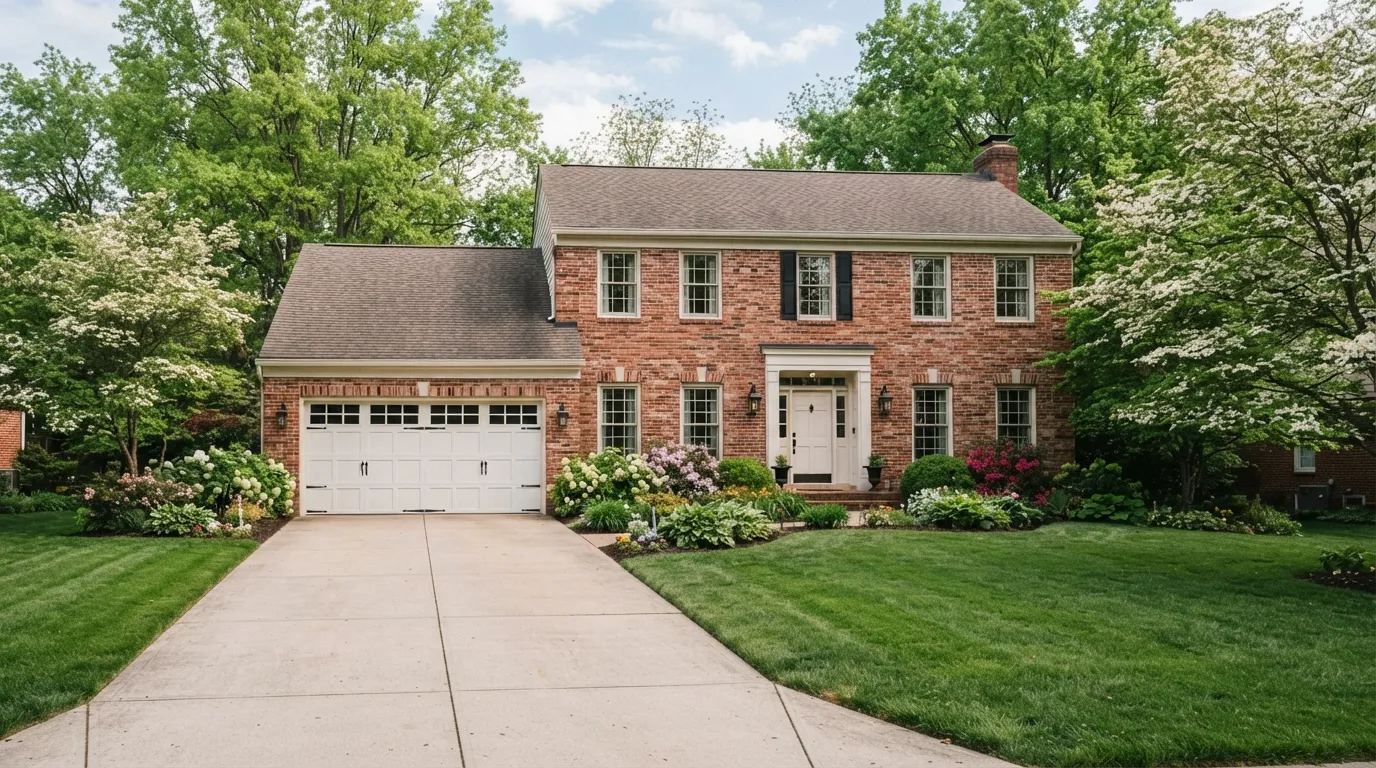
Parker's housing is newer than a lot of what we see elsewhere in the Rockwall service area - most of the roughly 1,553 households here sit in homes built well after 2000, with a median year right around 2005. That's good news in one sense: less of the seized, decades-old hardware we deal with in older stock. But it means almost every door here is still on its first set of rollers and its first track alignment, and hardware doesn't age well just because the house is newer.
The climate here is mild with occasional freezes rather than hard winters, so it isn't ice heaving a slab that knocks doors off track the way it might farther north. More often it's a track bracket that was never torqued quite right at the build, working looser year over year until a normal open-close cycle is enough to pop a roller free. That slow-loosening pattern is common enough in builder-grade installs from this era that it's usually our first suspect before we even get out of the truck.