How Local Conditions Play In
Rockwall's housing stock mostly went up between 1971 and 2013, with the median build year landing around 2002. That means most doors and openers in this area aren't ancient, but they aren't new either - they're old enough that the original bottom seal and side weather seals have hardened, and the vinyl has started to pull away from the track on one or both sides. Our climate here sits in the mild band with occasional freeze nights, not the deep-freeze cycles that crack rubber outright, but enough temperature swing across a year to shrink and stiffen seal material gradually. You won't see the dramatic failure you'd get somewhere with hard winters. What you get instead is a slow gap that opens at the bottom corners first, then along the sides, and most owners don't notice until they feel a draft on their feet while parking. Across the roughly 39,000 owner-occupied houses in this service area, that 2002-median build year means a big share of doors are due for a seal check, not a full replacement. The mild-freeze pattern also means seal failure here is usually gradual wear, not storm damage, which changes what you should be looking for and when you should act.
The Problem
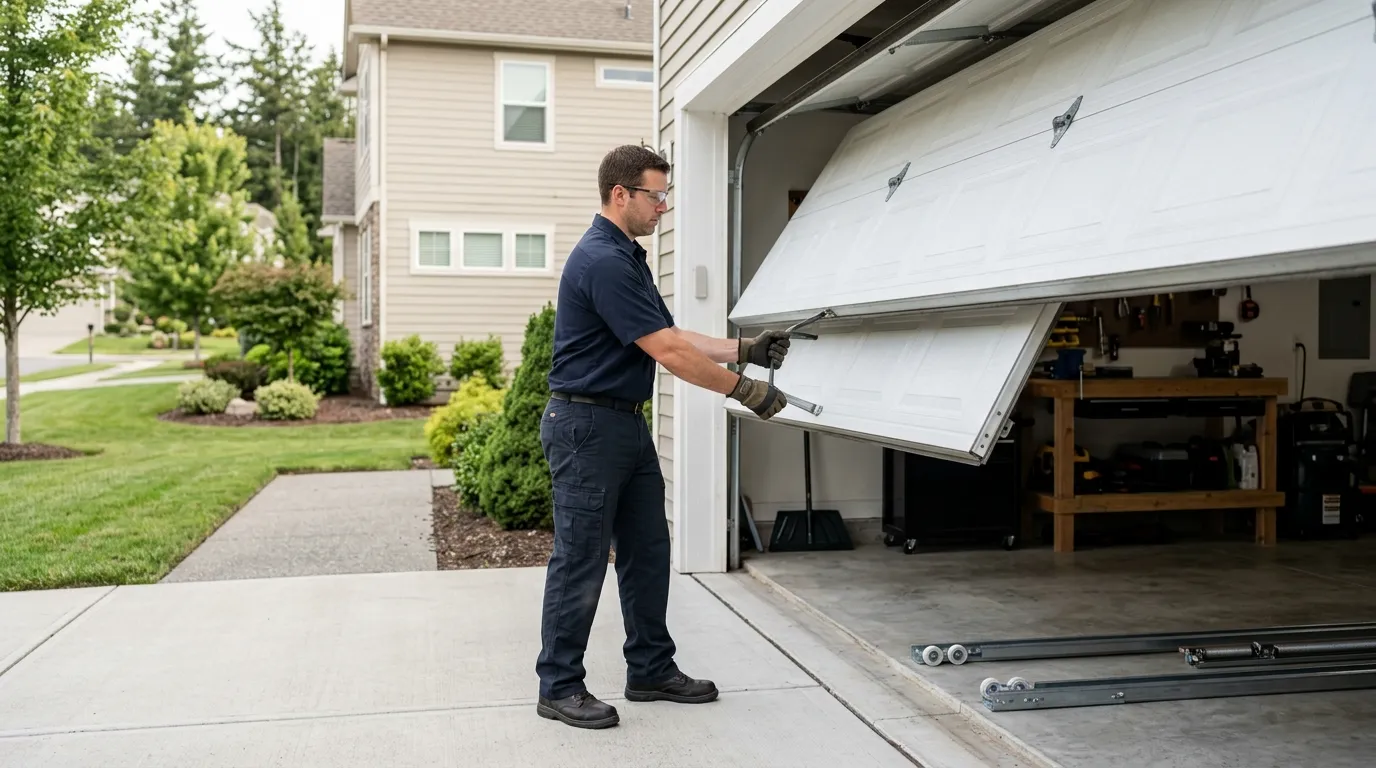
A worn seal doesn't just let in a draft - on a garage that shares a wall with living space, which is common in this housing stock, it lets in enough temperature swing to make an adjoining room noticeably colder in the mild-freeze months here. Cold air pooling at the base of the door also finds any gap in the weatherstripping around the jamb, so what starts as a bottom-seal issue can look like a jamb-seal issue by the time someone calls us. On older ends of the 1971-2013 range, the door panel itself may have settled slightly on its hinges over the decades, which changes how evenly the bottom seal contacts the slab and creates a gap on one side even with a brand-new seal installed. That's the part a straight seal swap won't fix. If the door doesn't sit level against the floor anymore, no seal solves that alone - the track or hinges need adjustment first, and it's fair to say some of what looks like a seal problem is actually a leveling problem that's been masked by a seal for years.
When to Get Help
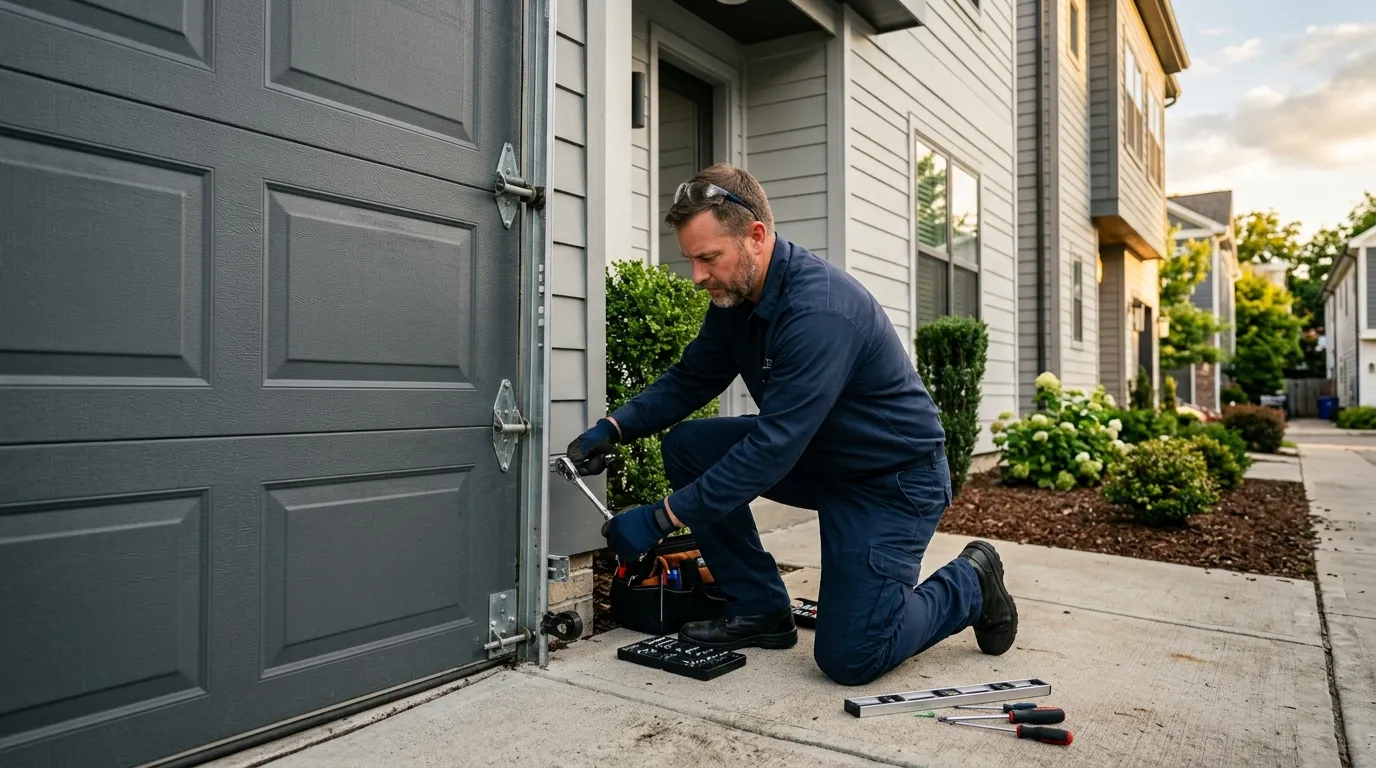
If you can see daylight along the bottom of a closed door, or feel a steady draft rather than an occasional one, that's worth a call rather than another tube of caulk. Houses built in the earlier part of the 1971-2013 range are the ones we'd flag hardest, since seal material that old has usually outlived its flexibility no matter how it looks. We're honest that some jobs are a five-minute seal swap and some need the door leveled first - we won't sell you a new seal on a door that's out of alignment and call it fixed. If your seal is failing at both bottom corners and along one side, that's usually the leveling issue underneath, not three separate seal problems. We work across the Rockwall area including nearby Fate, Heath, McLendon-Chisholm, and Lavon, and can take a look before you spend money guessing.