How Local Conditions Play In
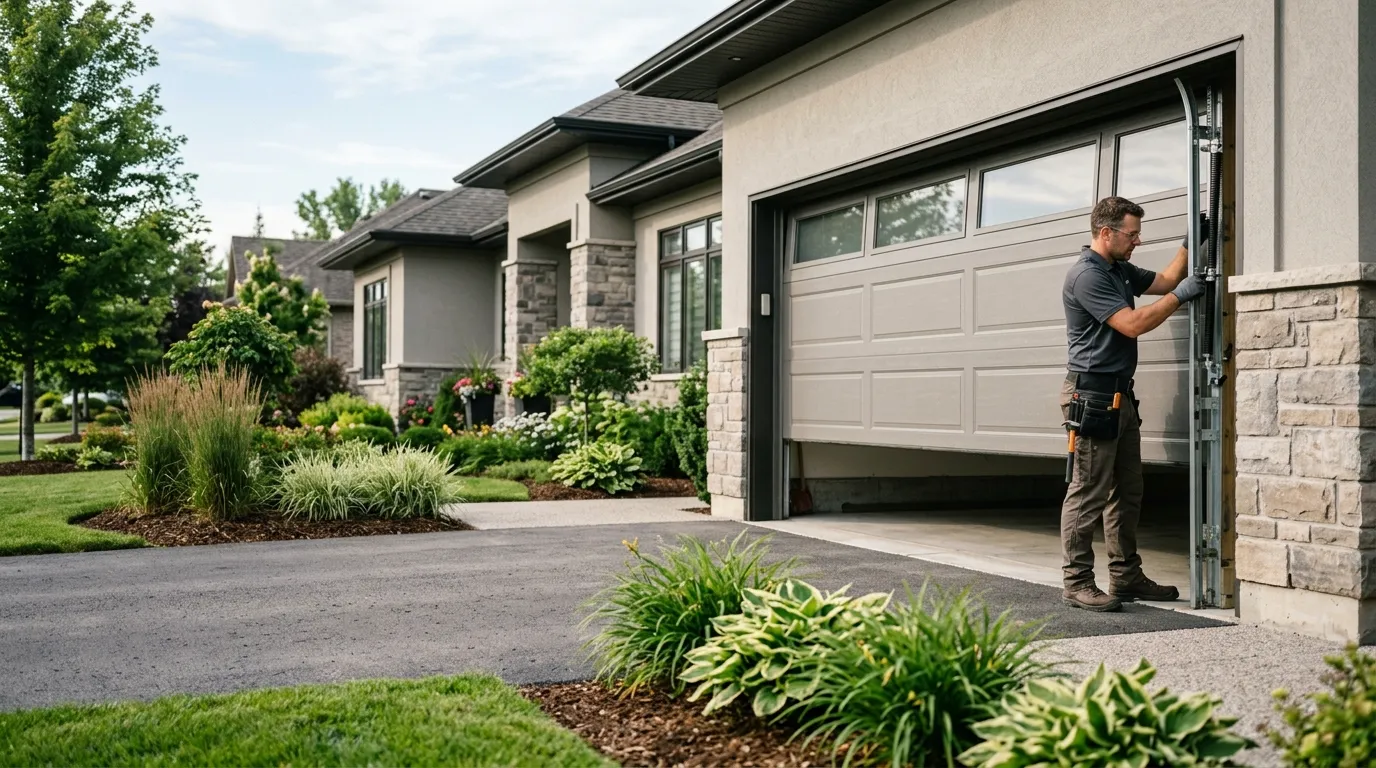
Most of the housing stock around Rockwall went up between 1971 and 2013, with the median build year sitting at 2002. That means the door on a big share of these garages is a builder-grade unit from the late 1990s or early 2000s - not ancient, but old enough that the original opener and hardware are nearing or past their expected service life. Across the 21 named areas that make up this service region, the pattern repeats: a wave of construction, a wave of matching garage doors installed at the same time, and now a wave of them failing in the same decade.
The climate here is mild with occasional freeze, which actually works in your favor. You don't get the deep freeze-thaw cycles that crack panels or seize torsion springs the way a harsher winter climate does. A steel door built in 2002 in this area has usually held its shape and its seal better than the same door would have thirty degrees colder. That's the good news. The bad news is that mild weather doesn't stop springs from cycling out, cables from fraying, or nylon rollers from wearing down - it just means when something fails here, it's age and use catching up, not storm damage.
The Problem
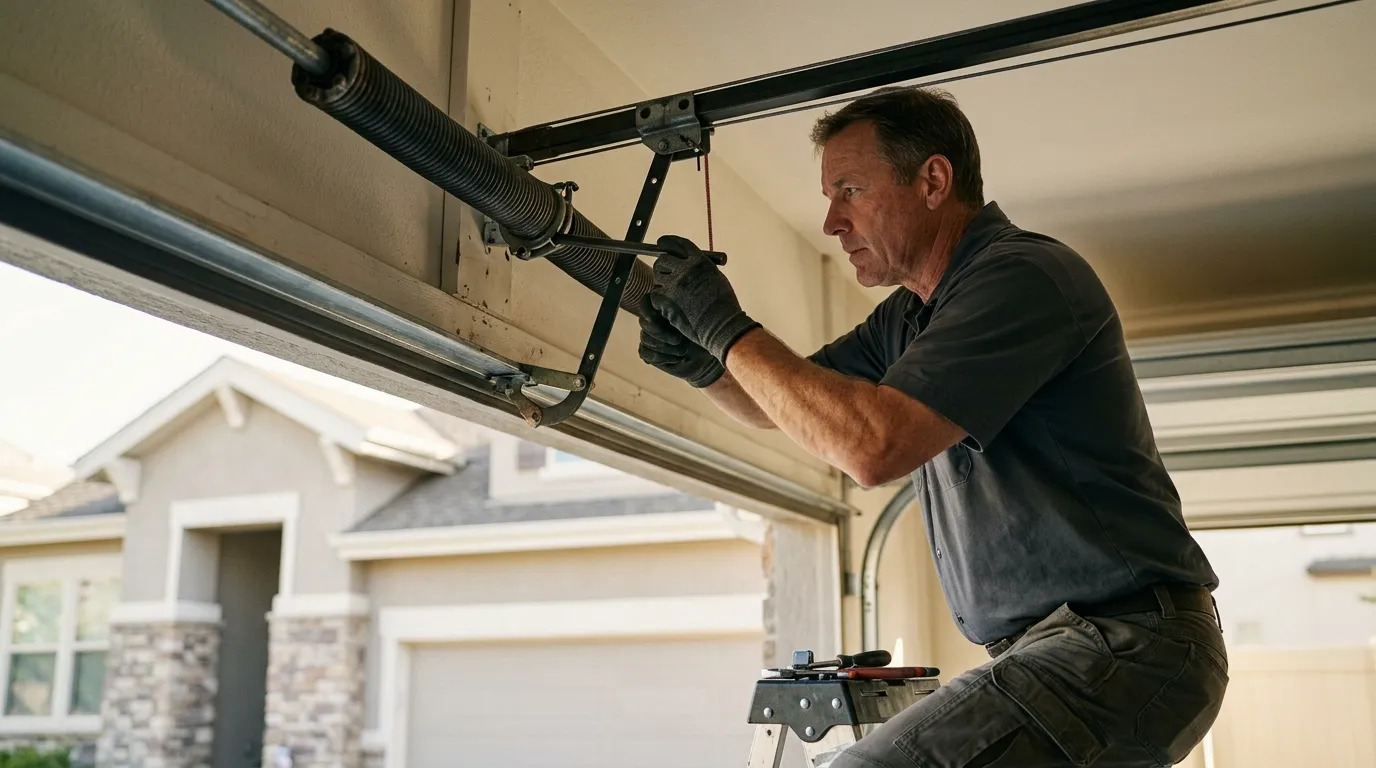
With median household income in this service area at $124,500 and roughly 39,000 owner-occupied houses out of 51,055 households, most of the calls we get aren't about affording a fix - they're about knowing which fix is worth making. A torsion spring replacement on a door from the 2002 median build year is almost always worth it: springs are rated for a set number of cycles regardless of age, and swapping them restores the door to full function for a fraction of replacement cost.
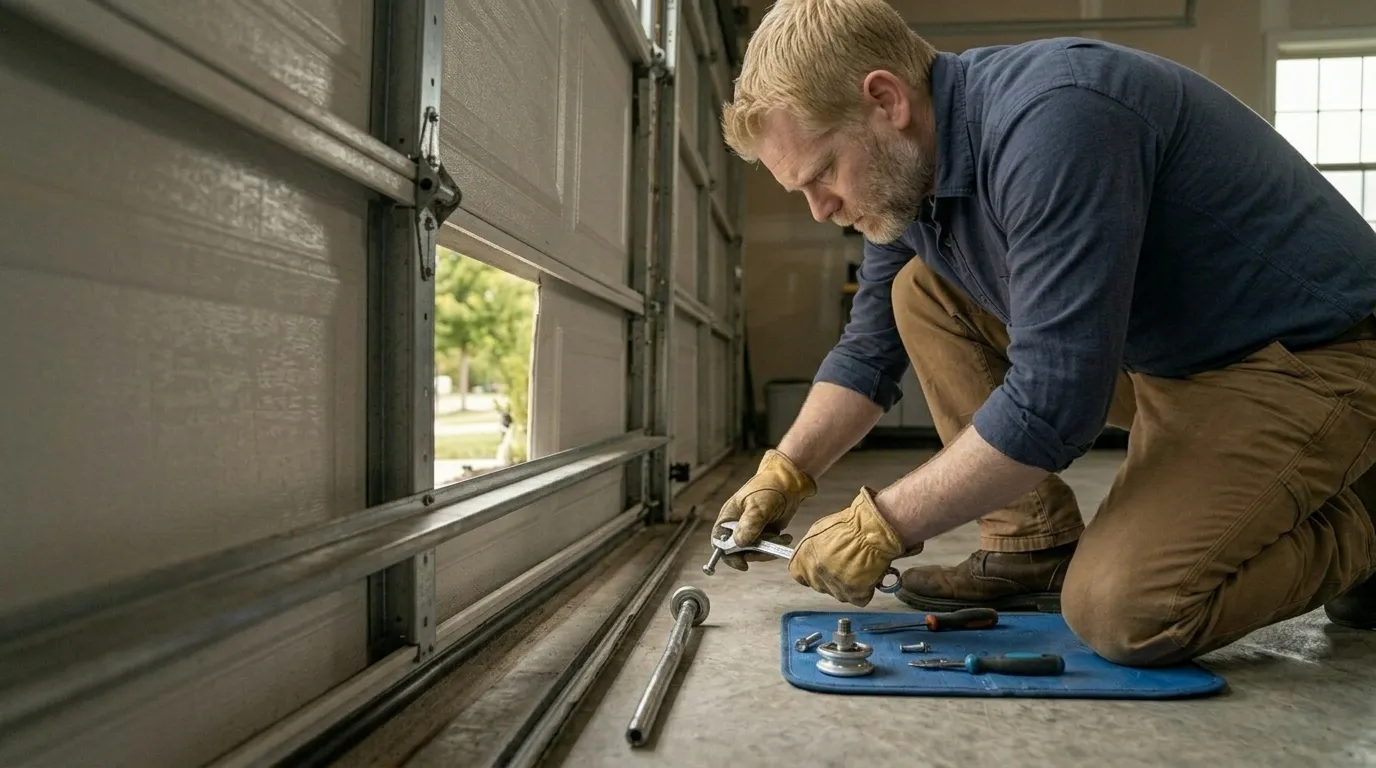
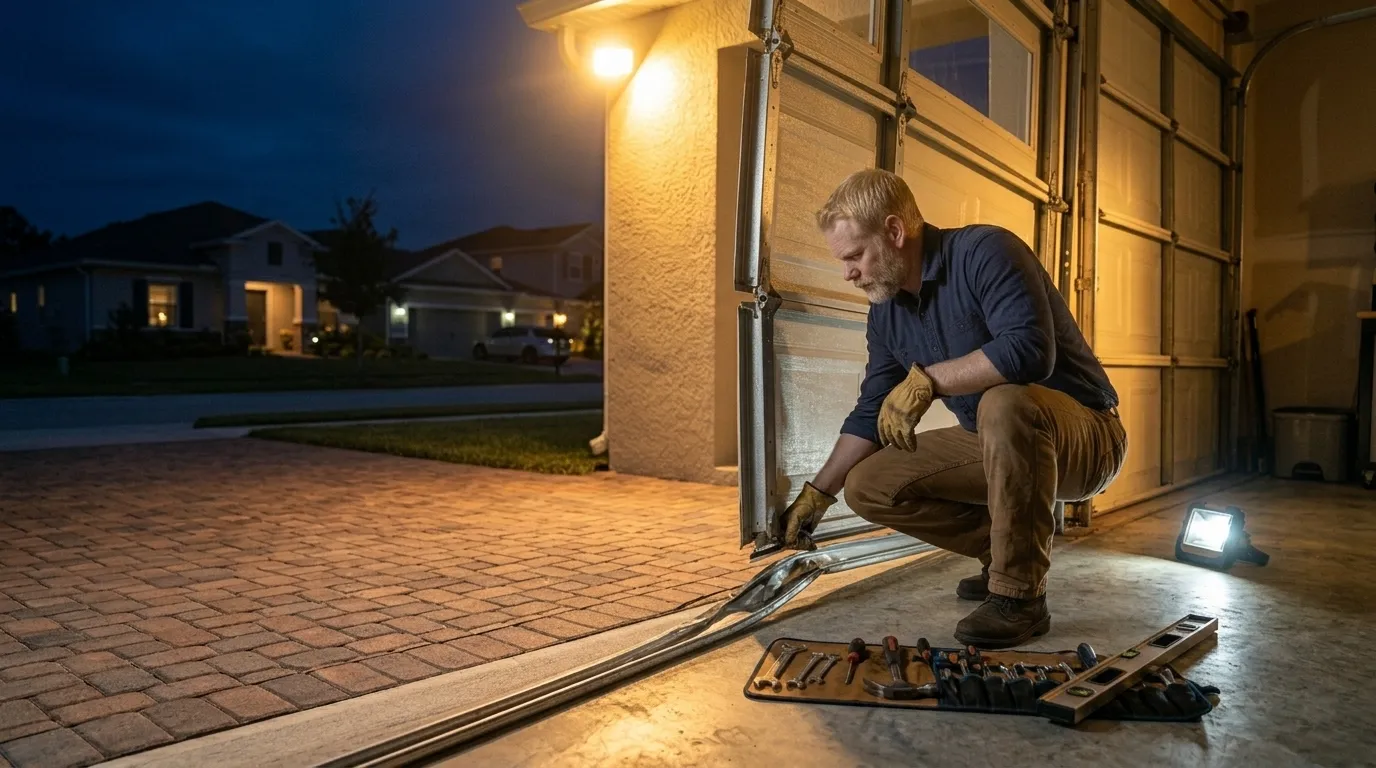
Where it stops being worth fixing is when the track is bent badly enough that the door binds no matter how many rollers you replace, or when the panels themselves have rusted through or delaminated - something we see more on the cheaper original doors from that building wave than on mid-grade ones. At that point you're not repairing a door, you're rebuilding one panel at a time, and a new door costs less than the sum of those repairs.
When to Get Help
Call before you replace anything if the door is loud, slow, or uneven but still opens and closes - that's almost always a spring, cable, or roller issue, not a reason to junk a door from the 2002-era stock that's otherwise structurally fine. Call before you keep patching if you're on your second or third opener repair in a year; at that point the labor adds up faster than a new opener would cost.
One limit worth being upfront about: we don't stock every panel style from every builder-grade line installed during the 1971-2013 construction run, so if you need a single matching replacement panel for an older door, there can be a wait on that part, or it may not be available at all. In that case we'll tell you straight whether it makes more sense to source the panel or replace the door.