What the Housing Means for Your Door
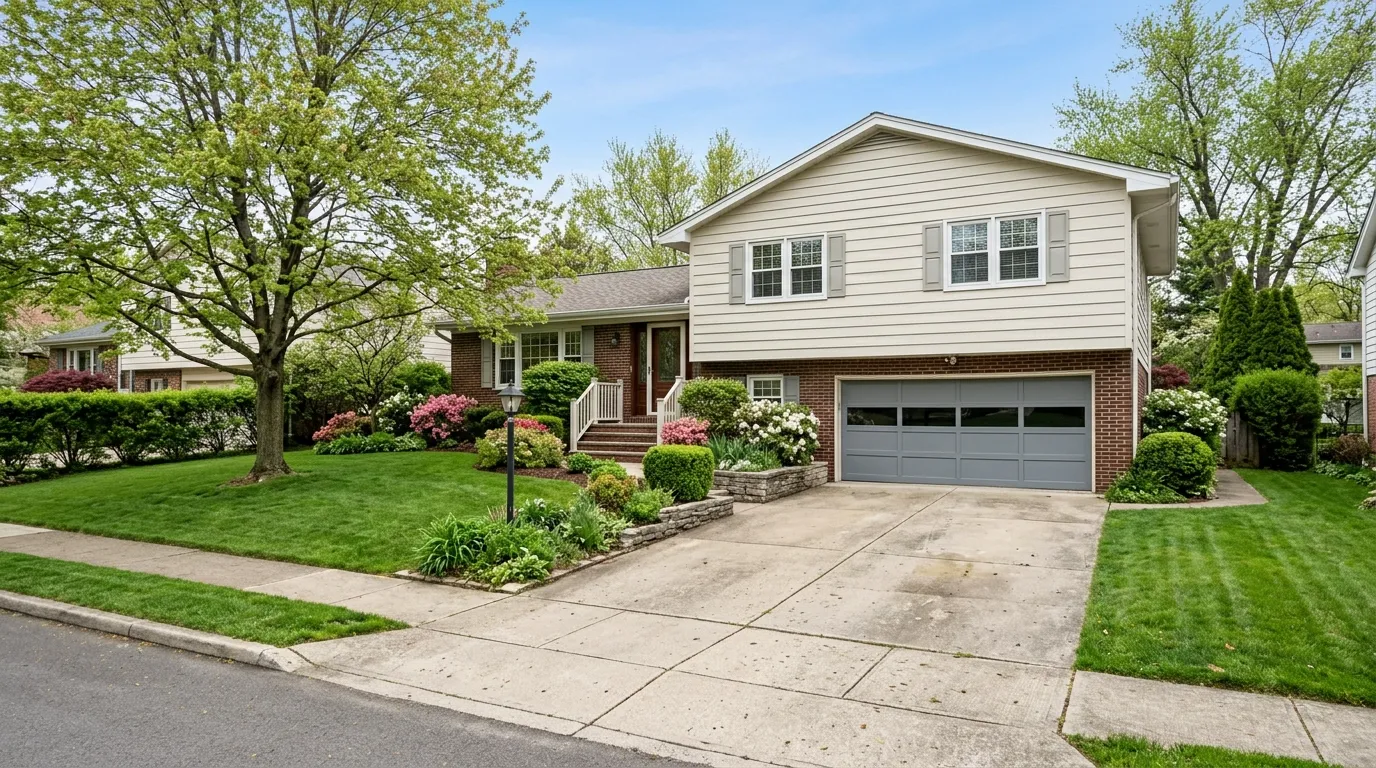
Poetry sits apart from the newer growth closer to Rockwall. The typical home out here dates to around 1985, a good fifteen to twenty years older than the median across the wider service area, where most stock went up in the 2000s. That gap matters more than people think. A door installed in the mid-1980s is likely on its second or third opener by now, but the original track and hinges sometimes survive, especially on doors that were never upgraded to insulated panels. We see more single-layer steel doors out here, more older extension-spring setups instead of torsion, and more openers that predate rolling-code safety standards. None of that is a problem on its own, but it changes what a repair call actually involves. Replacing a sensor eye on a 1985 door isn't the same job as doing it on a 2010 door with different bracket spacing. If your opener chain-drives with a visible rail and a light that doesn't blink to signal a fault code, that's consistent with the age of housing typical here, and it tells us before we even arrive roughly what parts to bring.
This Area's Housing
With roughly 428 households in Poetry, this is a small pocket, and it doesn't behave like the denser parts of the service area. Median household income here runs about $103,333, a bit under the $124,500 median for the broader area, which tends to track with older housing that hasn't been through a full renovation cycle. Doors from the 1980s were built to a different set of expectations than what's sold today, before current insulation standards and before the two-inch torsion springs that are now standard on most double-car doors. The region overall sits in a mild climate band with occasional freeze days, which is gentle on hardware compared to harsher climates, but temperature swings still stiffen old grease in bearings and rollers that haven't been serviced in years. On a door this age, we usually check the torsion or extension springs, the roller condition, and whether the panels have separated at the seams before we even talk about the opener.
What Neighbours Usually Call About
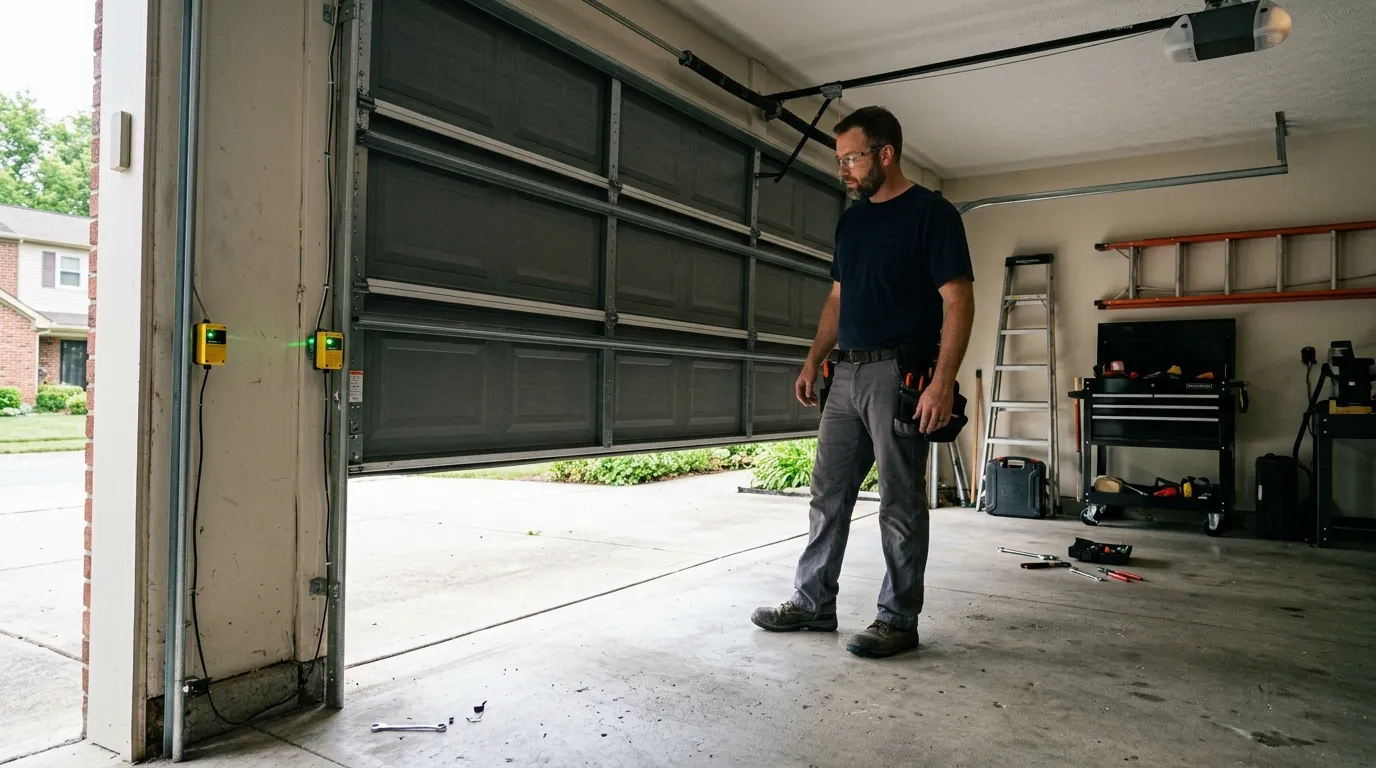
Calls from this part of the service area lean toward wear, not damage. Extension springs that have stretched past safe tension, rollers that have gone from nylon-quiet to metal-loud, and openers with worn drive gears are the regulars. We also get calls about doors that reverse randomly on the way down, which on a house this age is more often a misaligned sensor bracket than a bad circuit board, since many of these openers predate the current photo-eye standard entirely. One honest note: if your opener is original to a 1980s install, parts for that exact model are often no longer made, and at some point replacing the whole unit costs less than keeps chasing failing parts on the old one. We'll tell you straight when that line has been crossed instead of billing you for it twice.