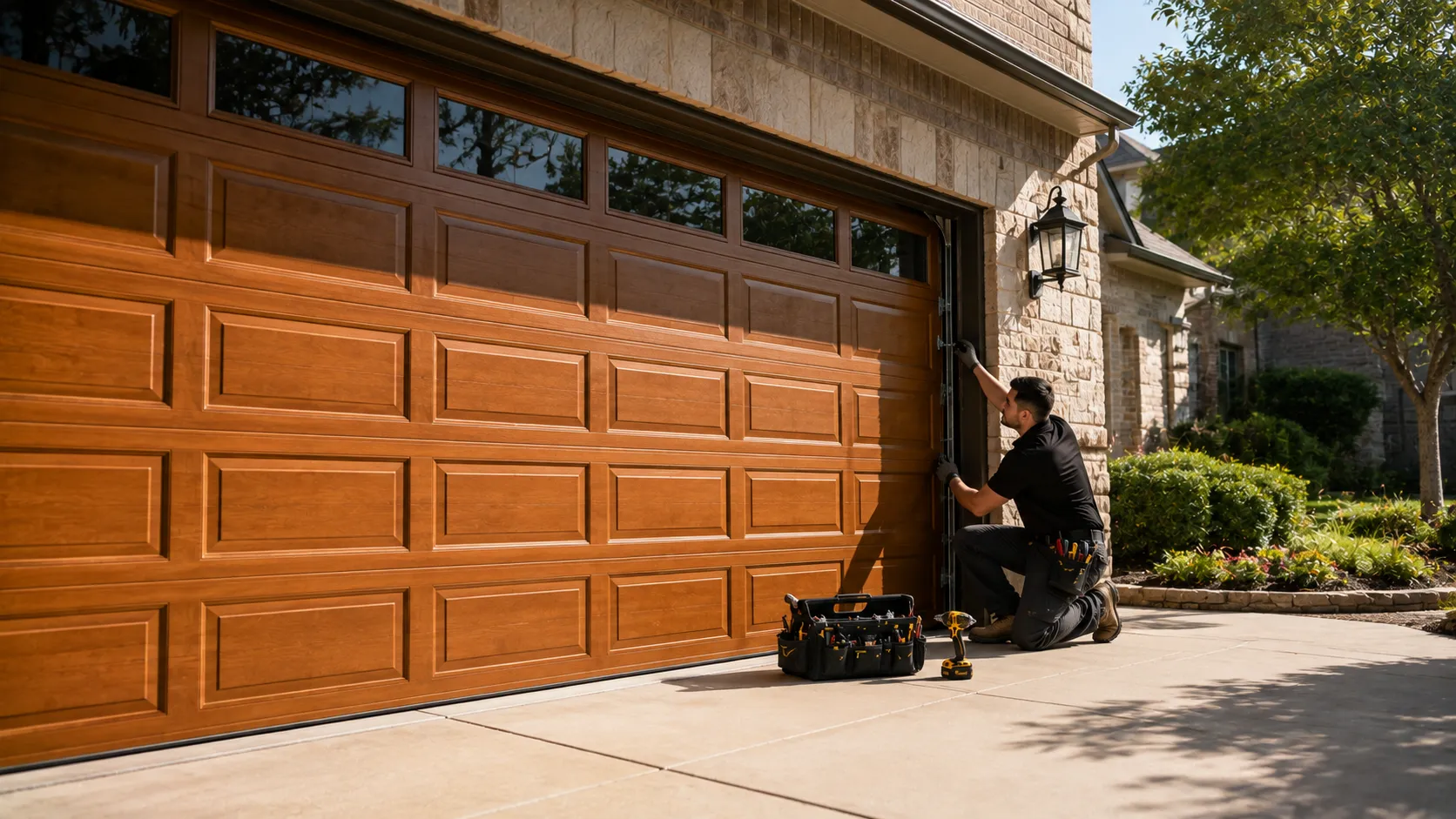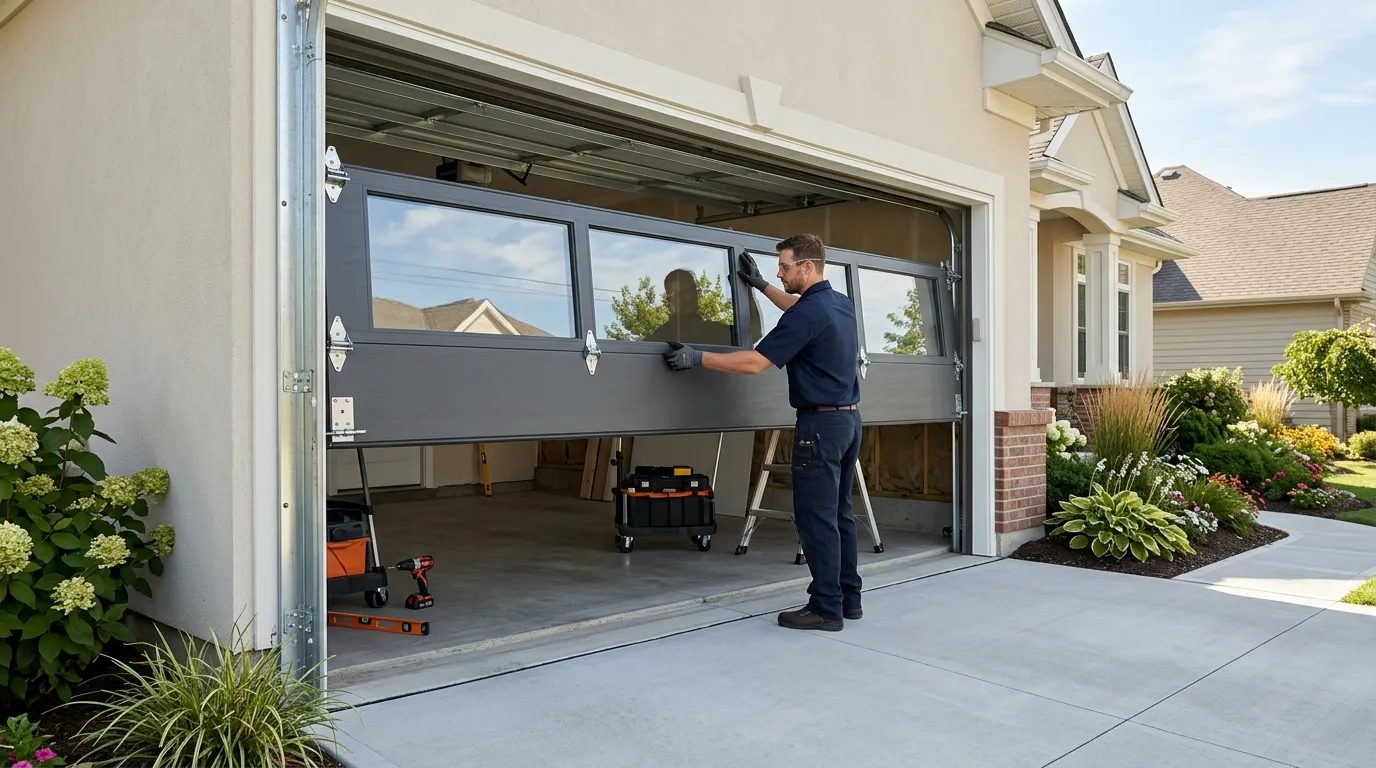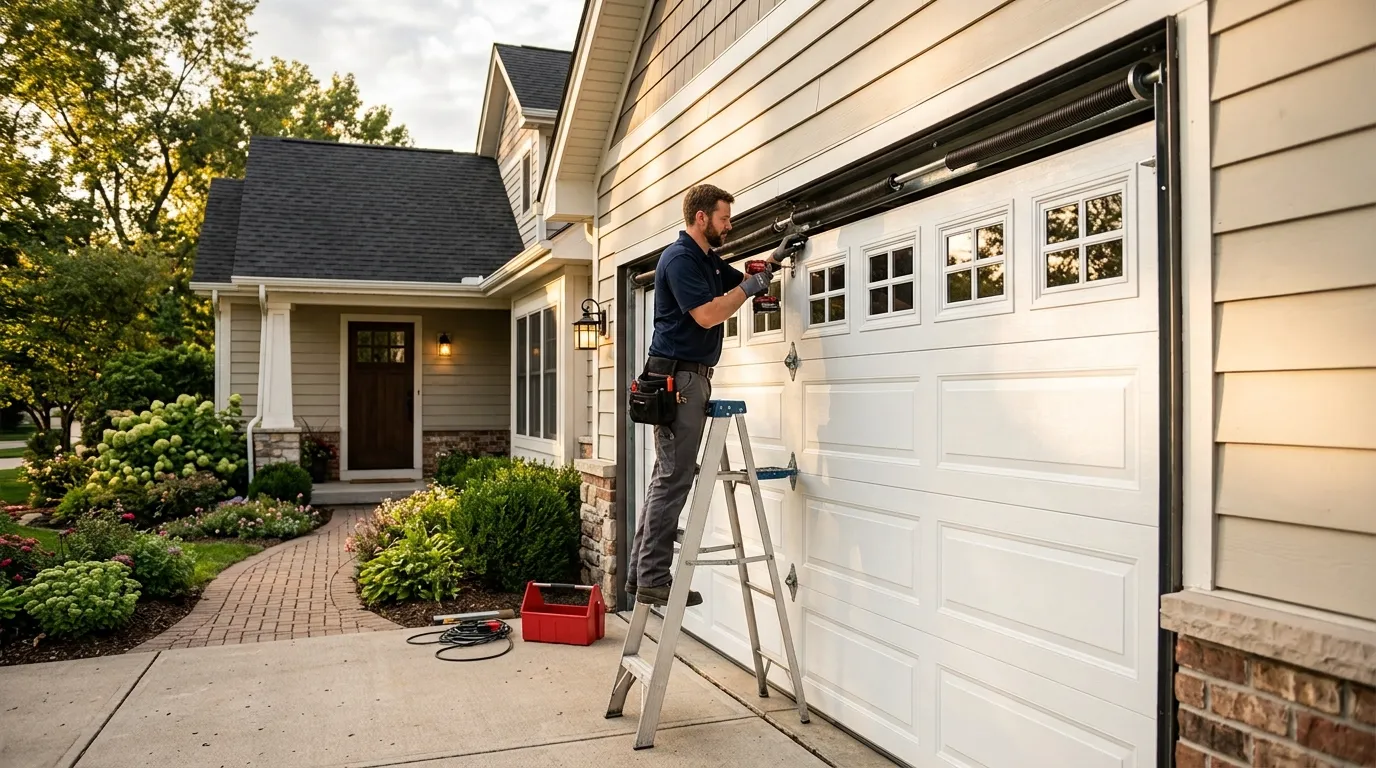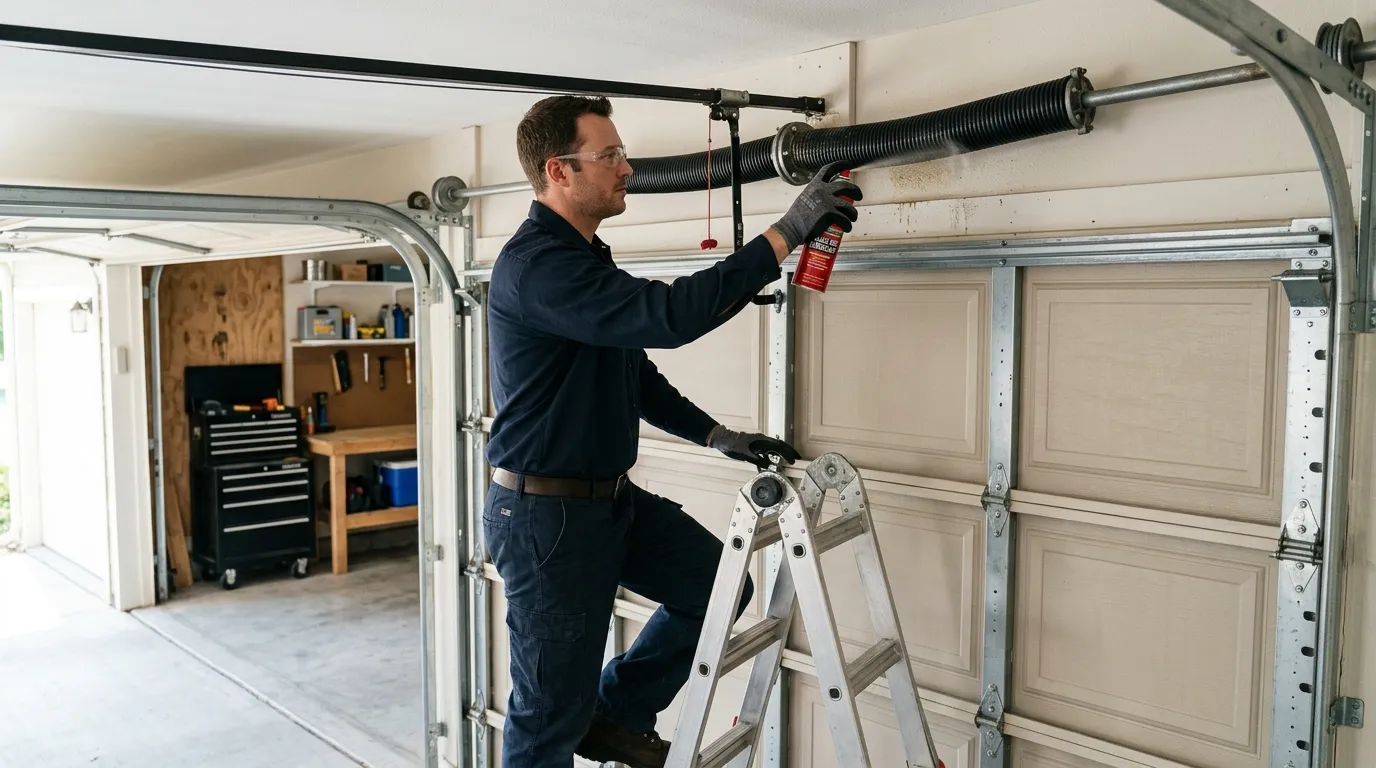
What the Housing Means for Your Door
Farmersville doesn't match the rest of the area we cover. Across the wider service territory the housing stock leans 2000s, with a median build year around 2002. Farmersville's median build year is 1971 - three decades older. That gap matters more than it sounds like it should.
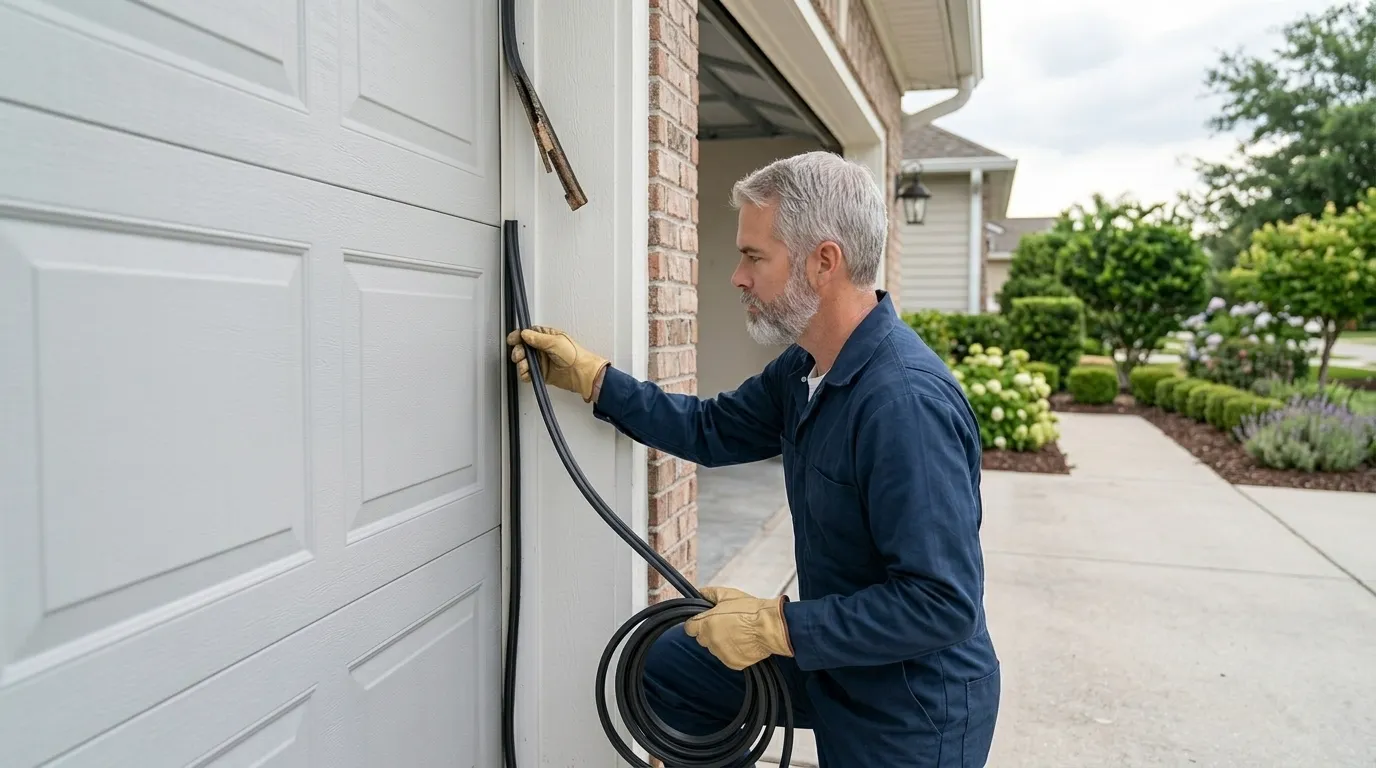
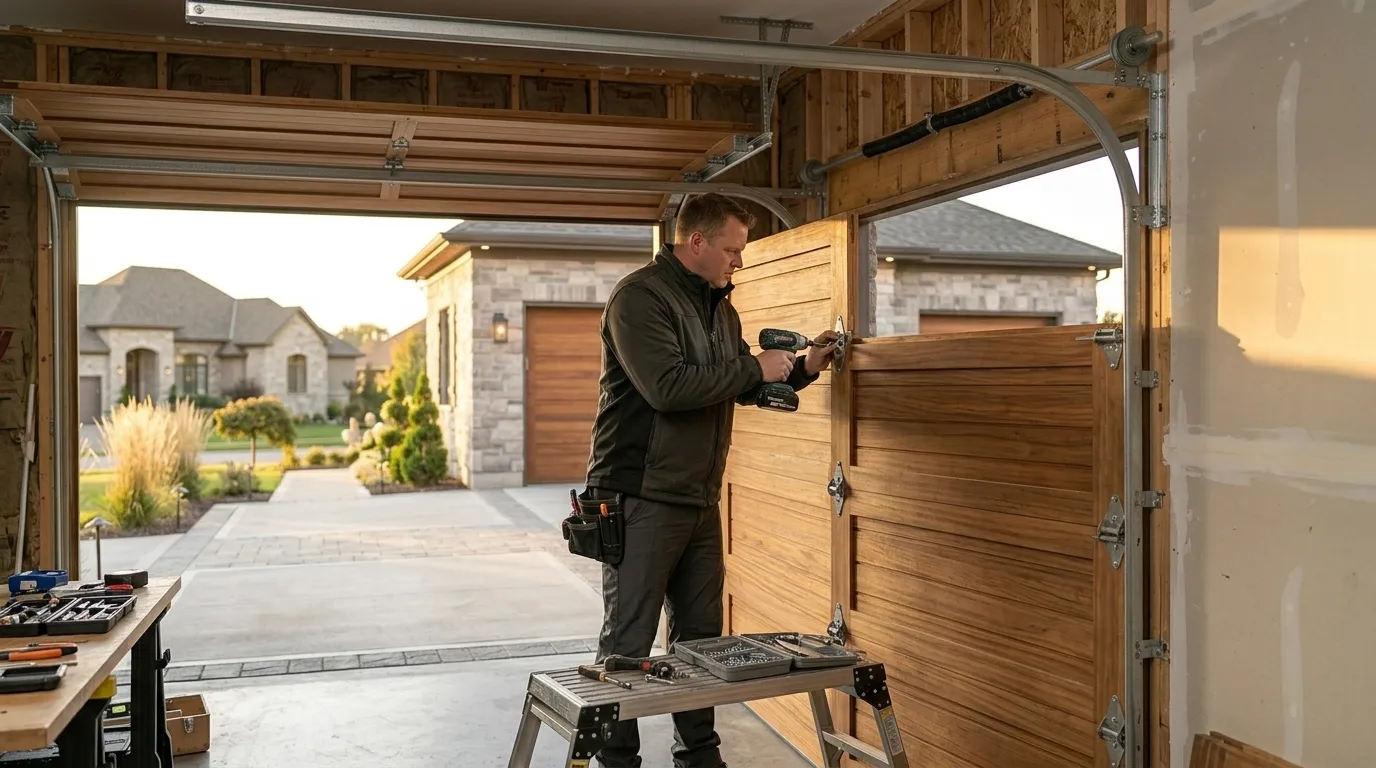
A door installed in the early 1970s was almost never replaced with matching hardware when it finally failed. What you get instead is a mix: a 1970s frame with a 1990s torsion spring bolted on, or a newer steel door hung on the original track because the track still looked fine. None of it matches, and none of it was designed to work together.
We see this pattern a lot on the older side of our coverage area - extension springs instead of torsion, single-piece hardware brackets that don't fit modern rollers, and openers wired into circuits that predate the safety-reversal sensors that are now standard. If your door is original to the house, or close to it, expect the fix to involve more than swapping one part. The hardware around the part you called about is usually the same age and close to the same condition.
This Area's Housing
Farmersville has around 1,414 households, and the median household income here is $47,016 - noticeably below the roughly $124,500 median across the broader service area. That's not a knock on the town; it's a reason we try to be straight about repair-versus-replace instead of pushing whichever job pays more.
On a house built around 1971, a full door replacement isn't always the right call just because the door is old. If the track is square, the opener still runs, and the springs are the only thing shot, replacing springs and leaving the rest alone is usually the honest answer. We'll tell you when a repair isn't worth doing - sometimes an opener from that era draws so much current or has so little safety hardware left that fixing it just delays a replacement you'll need anyway, and we'd rather say that than sell a patch.
What Neighbours Usually Call About
On older housing stock like Farmersville's, the calls cluster around a few things. Extension springs that have never been replaced and finally snap - these are common on doors from the early 1970s that never got upgraded to torsion. Rollers worn enough that the door binds or jumps the track, especially on doors that have had the same steel rollers since installation. And openers that still use the older non-rolling-code remotes, which sometimes just need a receiver swap rather than a whole unit replacement.
Our climate band here is mild with occasional freeze, so we don't see the extreme swings that crack panels or warp wood doors the way you'd get farther north. What we do see is slow wear catching up all at once - a spring that was due for replacement years ago finally letting go on a cold morning. If your door is groaning, hesitating, or reversing on its own, it's usually one of these three things, not something exotic.